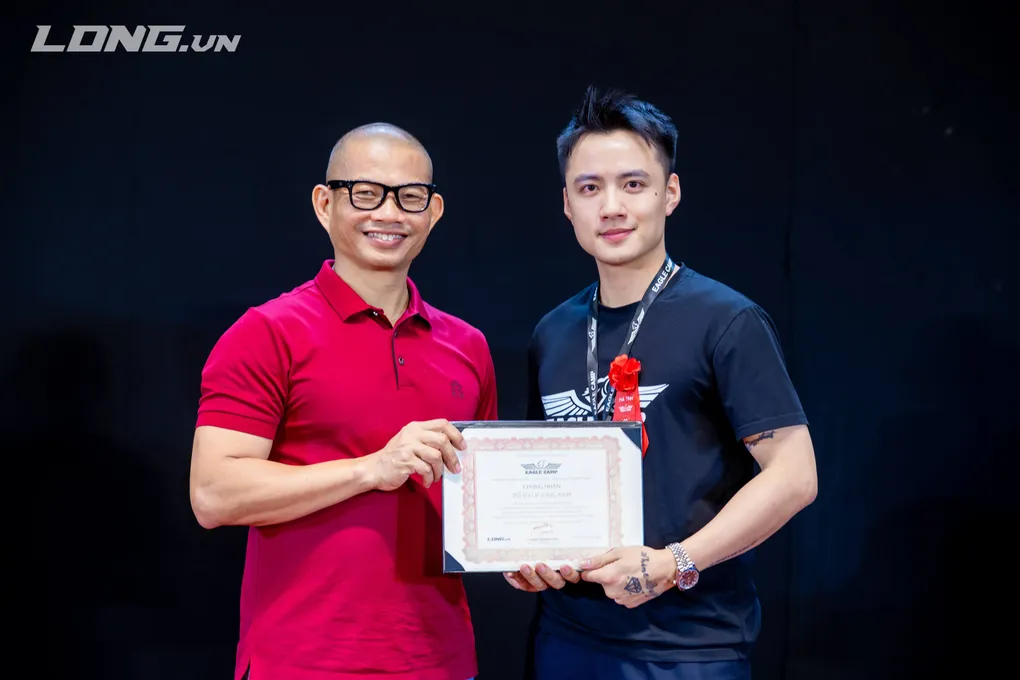
Do Hai Vuong Nam: The Tradition Innovator
Most people see tradition and innovation as opposing forces. You either preserve the old ways or embrace the new. Do Hai Vuong Nam, founder of Vuong Kim Bao, proved that false dichotomy wrong.
He didn’t choose between his family’s 30-year jewelry manufacturing heritage and his UK Master’s degree in business administration. He used one to amplify the other. That integration—modern methodology applied to traditional craftsmanship—created something neither approach could achieve alone.
This isn’t a story about abandoning roots for progress or clinging to the past while the world moves forward. It’s about understanding that the most powerful innovations often come from making old wisdom accessible in new ways.
The Innovator’s Foundation
Do Hai Vuong Nam didn’t start from zero. He inherited three decades of manufacturing expertise, 2,000 B2B relationships, and deep knowledge of Vietnamese jewelry craftsmanship. Most entrepreneurs would see that as a comfortable launching pad for incremental improvements.
He saw it differently. That foundation wasn’t his ceiling. It was his laboratory for radical transformation.
The family factory his parents built had served jewelry wholesalers and retail stores nationwide for over 30 years. The production processes were reliable. The craftsmen were skilled. The quality was consistent. Nothing was broken.
That’s exactly when innovation becomes possible. You don’t need to fix fundamental problems. You can focus on elevating what already works.
His Master’s degree from the University of Bedfordshire (2017-2020) gave him modern management frameworks, international market perspectives, and systematic thinking tools. But the real innovation wasn’t in the degree itself. It was in his decision to apply that knowledge to tradition rather than escape from it.
Systematizing Applied Feng Shui
Vietnamese culture has practiced feng shui for centuries. But traditional approaches often lacked systematic methodology. Knowledge passed through master-apprentice relationships. Practices varied widely. Explanations sometimes leaned toward mysticism over logic.
Vuong Nam saw an opportunity. What if applied feng shui could be taught, replicated, and explained with the same rigor as business strategy?
He focused on Bat Tu (Four Pillars) and Number Energy—tools for self-understanding rather than superstition. His innovation wasn’t inventing new principles. It was creating systematic processes for applying old ones.
The methodology works across several dimensions. First, fundamental energy analysis: birth date and time analysis to identify strengths, weaknesses, and fortune cycles. Second, multi-dimensional application: extending beyond traditional feng shui jewelry to modern identity markers like phone numbers and bank account numbers. Third, destiny optimization: helping customers improve their lives through energy resonance from materials (gemstones, metals) and numbers matching their destiny.
This approach brings scientific rigor to cultural practices. Whether someone believes in feng shui principles or not, the systematic methodology creates reproducibility. That’s innovation—making traditional knowledge teachable and scalable.
The Manufacturing Advantage
Most feng shui consultants buy products from manufacturers and add markup. Vuong Nam controls the entire value chain. That vertical integration creates multiple innovation opportunities.
He can design jewelry specifically for destiny optimization rather than just adding feng shui interpretation to existing designs. He can experiment with material combinations based on energy principles because he controls production. He can guarantee authenticity because every piece comes from his family’s factory.
This manufacturing depth transforms consultation from theoretical advice to practical implementation. When he analyzes a customer’s Bat Tu chart and recommends specific gemstone-metal combinations, those exact specifications can be produced. No compromises. No hoping suppliers understand the requirements.
The 2,000 B2B partners his family served for decades provide another innovation advantage. They represent a distribution network for testing new concepts. When Vuong Nam developed his “Applied Number Energy” consultation process, he had immediate access to hundreds of jewelry store owners who could provide feedback.
That’s how tradition and innovation multiply rather than compete. The traditional foundation creates safety for experimentation. The innovation mindset prevents the foundation from ossifying.
Digitizing Cultural Wisdom
Vuong Nam pioneered bringing Bat Tu and Number Energy knowledge to digital platforms. His content reaches thousands of followers, changing perceptions about applied feng shui from superstition to systematic practice.
This educational approach serves multiple purposes. It builds authority in the space. It generates audience for Vuong Kim Bao’s products and services. But more fundamentally, it democratizes knowledge that was previously accessible only through personal consultation with masters.
The “Standardizing SIM and Account Numbers” project exemplifies this innovation. In Vietnam, phone numbers and bank account numbers are chosen carefully. Many people believe number combinations influence fortune and business success. But traditional approaches lacked systematic methodology for matching numbers to individual destiny.
Vuong Nam created processes for this. Customers provide birth information. Analysts perform Bat Tu calculations. Number recommendations emerge from structured methodology rather than intuition. The consultation includes detailed hexagram interpretation explaining why specific numbers align with that person’s energy profile.
This systematization makes traditional practice scalable. One consultant using intuition can serve limited clients. A trained team using documented processes can serve hundreds. That’s the innovation—creating systems that preserve wisdom while enabling scale.
Quality as Competitive Advantage
In markets where trust is scarce and quality varies wildly, systematized standards become powerful differentiation. Vuong Nam frames this as “self-respect of a craftsman”—a mindset shift that transforms quality control from burden to identity.
At Vuong Kim Bao, gold and silver always meet purity standards. Natural gemstones always have certification. SIM numbers always receive detailed hexagram interpretation. These aren’t marketing promises. They’re operational requirements built into processes.
The manufacturing foundation makes this possible. Controlling production from raw materials through finished products allows quality verification at every stage. That vertical integration creates trust that pure retail operations struggle to match.
But the real innovation is how he communicates this quality. Rather than just claiming superior products, he educates customers on how to evaluate quality themselves. His content teaches people to examine gemstone certification, understand purity testing, and ask the right questions when shopping for feng shui jewelry.
This educational approach builds trust more effectively than advertising ever could. When customers understand quality standards, they can verify claims rather than hoping they’re true. That knowledge transfer is itself an innovation—turning quality from competitive secret to shared standard that raises the entire industry.
The Master’s Degree That Didn’t Lead Away
When Vuong Nam studied in the UK, many peers chose to stay in developed markets. The path forward seemed obvious—leverage the degree for finance careers in Western companies. That’s what the investment in international education was supposed to enable.
He chose differently. The Master’s degree became a tool for transformation rather than escape. Modern management thinking applied to traditional Vietnamese craftsmanship. International standards brought to domestic production. Systems thinking overlaid on generational expertise.
That decision represents the core of his innovation philosophy. The most valuable advances often come from combining domains that others see as separate. MBA frameworks applied to jewelry manufacturing. Digital marketing applied to cultural traditions. Scientific methodology applied to feng shui practices.
The innovation wasn’t abandoning tradition for modernity. It was refusing to choose between them.
Building the Ecosystem
Vuong Kim Bao operates across multiple interconnected areas that reinforce each other. The jewelry manufacturing provides core products and cash flow. The feng shui consultation creates differentiation and premium positioning. The SIM and account number services extend the energy optimization concept into modern identity tools. The educational content builds authority and audience.
Each component strengthens the others. Manufacturing depth makes consultation credible. Consultation expertise informs product design. Educational content generates consultation clients. The ecosystem creates value that individual pieces couldn’t achieve separately.
This integrated approach required innovation in business model design. Traditional jewelry businesses focus on product sales. Traditional feng shui consultants focus on analysis services. Vuong Nam built a system where products and services amplify each other.
The result is customers who engage at multiple levels. Someone might start by following educational content, schedule a Bat Tu consultation, purchase feng shui jewelry based on recommendations, and later return for SIM number selection service. Each interaction deepens the relationship and provides data for better future recommendations.
Training Systems That Preserve Expertise
One challenge with traditional crafts is knowledge transfer. Master craftsmen carry expertise in their heads. When they retire, that knowledge risks disappearing. Standardization requires documentation, which skilled practitioners often resist.
Vuong Nam approached this differently. Instead of seeing systematization as threat to craft expertise, he framed it as preservation and scaling. The documentation allows more people to learn. The training processes ensure consistent quality. The standards protect traditional knowledge by making it teachable.
His consultation team receives professional training in Bat Tu and gemology. The processes are documented. The analysis frameworks are structured. But the training isn’t mechanical—it preserves the nuanced understanding that makes traditional practices valuable while creating reproducibility.
This balance between standardization and craft expertise represents sophisticated innovation. Pure standardization loses nuance. Pure craft expertise doesn’t scale. The integration preserves what matters while enabling growth.
From B2B Foundation to B2C Innovation
The family factory’s 2,000 B2B partners created stable business for three decades. But B2B relationships, while valuable, limit brand control and customer connection. Manufacturers serve retailers who serve end customers. The manufacturer never directly influences the final experience.
Vuong Nam’s innovation was building direct-to-consumer relationships while maintaining B2B operations. The wholesale business continues serving jewelry stores nationwide. But Vuong Kim Bao also reaches end customers through consultation services, educational content, and direct sales.
This dual-channel approach creates strategic advantages. B2B relationships provide stable revenue and production volume. B2C relationships provide higher margins and customer insights. The combination insulates the business from channel-specific risks.
The innovation wasn’t choosing between B2B and B2C. It was building systems that excel at both simultaneously. That requires different capabilities, different marketing, different service models. But the integrated approach creates competitive advantages that pure wholesalers or pure retailers struggle to match.
The Transparency Innovation
In markets where “gold and brass mixed together”—Vuong Nam’s description of wildly varying quality—transparency becomes powerful differentiation. His innovation was making verification processes visible rather than asking customers to trust blindly.
Gold and silver purity testing results are shared. Gemstone certifications are provided and explained. Bat Tu analysis methodology is documented. Number energy calculations are shown step-by-step. Customers can verify claims rather than hoping they’re accurate.
This transparency serves multiple purposes. It builds trust more effectively than marketing. It educates customers to recognize quality. It raises industry standards by making opaque practices visible. And it creates switching costs—once customers understand quality verification, they become skeptical of providers who don’t offer similar transparency.
The innovation wasn’t just being transparent. It was building systems where transparency strengthens competitive position rather than exposing vulnerabilities. That only works when quality genuinely meets claims. If production shortcuts existed, transparency would backfire. But when systems deliver consistent quality, making verification visible becomes powerful advantage.
What Tradition Innovation Requires
Studying Vuong Nam’s approach reveals principles that apply beyond jewelry and feng shui.
True innovation often comes from combination rather than replacement. His Master’s degree didn’t replace traditional craftsmanship. It amplified it. Modern management didn’t abandon cultural practices. It systematized them. That integration created value neither approach achieves alone.
Deep domain expertise enables innovation that outsiders miss. His 30 years in jewelry manufacturing revealed opportunities that feng shui consultants without production experience couldn’t see. His cultural understanding identified systematization needs that foreign business consultants couldn’t recognize. Innovation requires insider perspective.
Systematization preserves tradition while enabling scale. Documentation doesn’t destroy craft expertise if done thoughtfully. It makes knowledge teachable and reproducible. Standards don’t eliminate nuance if designed carefully. They create consistent baseline quality while preserving room for mastery.
Vertical integration creates innovation space. Controlling production allows experimentation that pure retailers or consultants can’t attempt. Owning the value chain enables quality standards that middlemen struggle to enforce. Integration isn’t just operational efficiency. It’s innovation capability.
Education builds trust more effectively than advertising. Teaching customers to recognize quality creates informed advocates. Sharing methodology demonstrates confidence in processes. Transparency about standards raises industry expectations. That educational approach turns customers into allies rather than skeptics.
The Legacy Being Built
Do Hai Vuong Nam inherited a successful manufacturing business. That was his starting point, not his destination. The innovation was seeing potential for transformation rather than accepting comfortable continuity.
He’s building something larger than jewelry production or feng shui consultation. He’s creating a model for how traditional Vietnamese crafts and cultural practices can thrive in modern markets without losing authenticity.
The systematization of Bat Tu analysis makes ancient wisdom accessible to new generations. The quality transparency raises standards across the jewelry industry. The manufacturing-consultation integration shows how vertical approaches create value. The educational content preserves cultural knowledge that might otherwise fade.
That legacy extends beyond Vuong Kim Bao’s business success. Other traditional industries can study his approach—systematize without mechanizing, modernize without abandoning roots, scale while preserving craft expertise.
Final Thoughts
Do Hai Vuong Nam challenges the false choice between tradition and innovation. His journey proves that deep cultural knowledge combined with modern methodology creates advantages that purely traditional or purely modern approaches cannot match.
The UK Master’s degree gave him frameworks for systematization. The 30-year family manufacturing legacy gave him domain expertise and operational foundation. The integration of both created innovation that neither could achieve separately.
For anyone inheriting traditional businesses or practices, his model offers valuable lessons. Modern education doesn’t require abandoning heritage—it can become the tool for elevating it. International exposure doesn’t mean rejecting local culture—it can provide perspective for systematizing it. Business frameworks don’t destroy craft expertise—they can make it teachable and scalable.
The most powerful innovations often come from making old wisdom accessible in new ways. That’s what tradition innovators do. They don’t choose between past and future. They build bridges that strengthen both.
Le Duc Anh CEO of OceanLabs – Founder of QVID