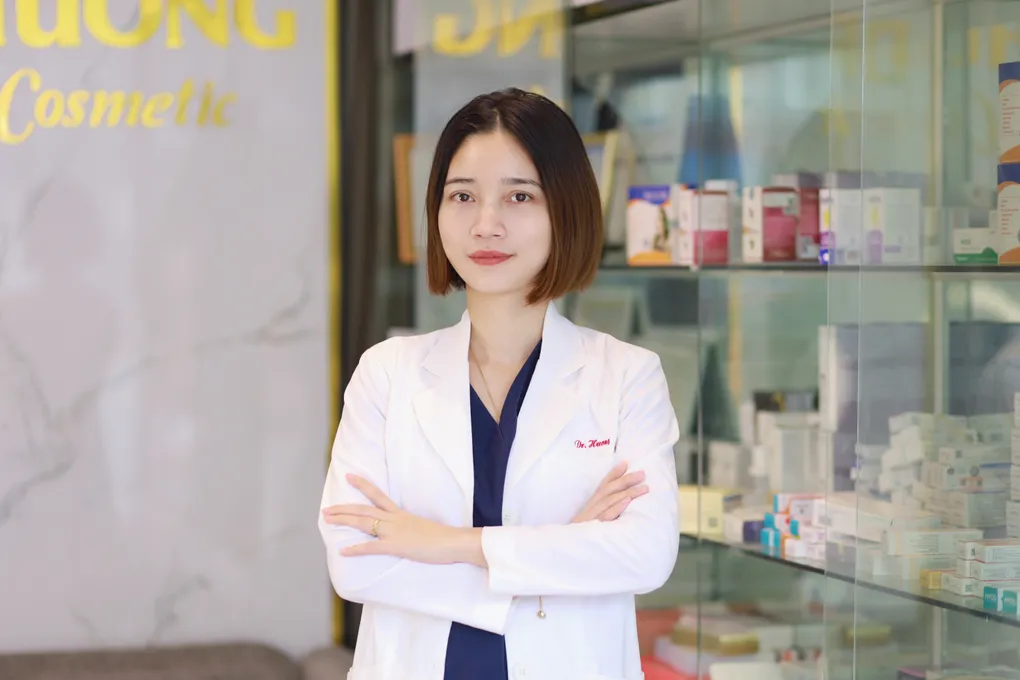
Dr. Nguyen Huong: The Empathy Practitioner
Most doctors study diseases in textbooks before encountering them in patients. Dr. Nguyen Huong lived the disease first. She spent her teenage years avoiding mirrors, hiding from cameras, and believing her skin had stolen her right to feel beautiful. That painful personal experience became her greatest clinical asset.
After nearly 10 years of practice treating thousands of patients suffering from acne, melasma, and difficult skin conditions, she doesn’t just understand dermatology academically. She understands it emotionally. When a patient walks into her clinic with tears describing years of failed treatments, Dr. Nguyen Huong doesn’t just see a medical case. She sees herself at seventeen.
That empathy—born from genuine shared experience rather than professional sympathy—transforms how she practices medicine. It changes what questions she asks, how she explains treatments, what she considers success. She’s not just a dermatologist who treats skin. She’s someone who uses deep personal understanding to heal both physical conditions and psychological wounds.
This is empathy as clinical practice. And it creates outcomes that technical skill alone cannot achieve.
The Foundation of Empathy
Severe acne covered Dr. Nguyen Huong’s face during her teenage years. The physical scars were visible. The emotional scars went deeper. Every social situation felt like exposure. Every morning started with a battle against her own reflection. Every product that failed added another layer of frustration and hopelessness.
She tried everything. Creams that promised miracles. Home remedies from well-meaning relatives. Celebrity-endorsed products. Nothing worked. Some treatments made things worse, adding new damage to existing problems. The cycle of hope and disappointment became its own source of suffering.
High school and university—supposed to be the best years of life—became exercises in hiding. She sat in the back of classrooms. She avoided photographs at every gathering. Dating felt impossible. Friendships were filtered through constant insecurity. The bright, ambitious student inside was trapped behind a wall of shame.
That experience could have broken her. Instead, it forged something stronger: unshakeable determination to ensure others wouldn’t suffer the same way. If she couldn’t find answers for her own skin, maybe she could become the person who finds those answers for others.
The decision to study medicine wasn’t just career planning. It was personal warfare. She enrolled at Hai Phong Medical University with motivation her classmates probably never understood. While others saw dermatology as one specialty among many, she saw it as her destiny and battlefield.
Graduating in 2015 marked the beginning, not the end. She pursued specialized training in dermatology at Hanoi Medical University. She trained at the National Hospital of Dermatology and Venereology in Hanoi. She studied at dermatology hospitals in Ho Chi Minh City. Each institution added weapons to her arsenal against the enemy she once faced in every mirror.
Understanding That Transcends Training
Dr. Nguyen Huong’s specialization deepened across multiple areas that directly addressed her own history of suffering. Acne treatment became her primary focus—every severe case she sees triggers memories of her own scarred reflection. Pigmentation and melasma treatment followed, addressing the dark patches that haunted her for years. She mastered high-tech rejuvenation procedures, laser treatments, Botox, fillers, and both medical and cosmetic dermatology.
But what separates her from dermatologists who learned about skin problems only from textbooks is her emotional pattern recognition. When a patient describes trying countless products that promised everything and delivered nothing, she doesn’t just hear a medical history. She remembers her own bathroom shelf filled with expensive failures. When someone mentions avoiding social events because of their skin, she recalls her own years of isolation.
This lived experience creates clinical advantages that training alone cannot provide. She knows which questions reveal crucial information that patients might not volunteer. She understands the psychological toll that conventional medical approaches often ignore. She recognizes when treatment failure stems not from wrong medication but from patient discouragement leading to incomplete protocols.
Her nearly 10 years of practice have treated thousands of patients. But the foundation of her expertise—the empathy that makes her exceptional—was built long before medical school, in those painful teenage years of struggling with her own skin.
The Consultation Difference
Walk into Dr. Nguyen Huong’s consultation, and you immediately notice something different. She doesn’t rush. She doesn’t interrupt. She creates space for patients to share not just symptoms but emotions. That space matters more than most doctors realize.
Many patients arrive having tried multiple dermatologists who prescribed treatments without understanding context. Fifteen-minute appointments where doctors glance at skin, write prescriptions, and move to the next patient. Technically competent perhaps, but missing the psychological dimension that determines treatment success.
Dr. Nguyen Huong’s consultations address both physical and emotional aspects. She asks about previous treatments, but also about how skin problems affect daily life. Work confidence. Social relationships. Self-image. Dating. Photographs. Morning routines. The questions reveal not just medical history but psychological impact.
This comprehensive understanding informs treatment design. She doesn’t just prescribe medication—she creates protocols that account for patient psychology, lifestyle constraints, and emotional resilience. A treatment that works in clinical trials but requires perfect compliance from someone who’s emotionally exhausted will fail in practice. Empathy enables her to design approaches that account for human reality rather than ideal conditions.
The explanation phase also reflects her empathy-driven approach. She doesn’t use medical jargon without translation. She doesn’t assume patients understand complex biochemical processes. She explains what’s happening beneath the surface, why certain treatments work for specific conditions, how long realistic improvement takes, and what success actually looks like.
That educational component serves multiple purposes. It builds trust. It creates realistic expectations. It transforms patients from passive recipients of prescriptions into active participants who understand their own treatment. And it empowers them to recognize quality care versus marketing promises.
The Power of Shared Experience
One moment crystallizes the difference empathy makes. A woman sits across from Dr. Nguyen Huong, tears streaming, describing years of acne that destroyed her confidence. She’s tried everything. Spent thousands on products and procedures. Nothing worked. She feels hopeless.
A dermatologist without lived experience might offer sympathy: “I understand this is difficult.” Professionally appropriate. Technically correct. But abstract.
Dr. Nguyen Huong responds differently: “I had severe acne for years. I know what it feels like to avoid mirrors. I know the frustration of treatments that fail. I built my entire career on figuring out what actually works because I refused to let others suffer the way I did.”
The energy in the room shifts immediately. This isn’t doctor to patient. It’s someone who survived the same battle offering to guide someone still fighting it. The connection is visceral and therapeutic before any treatment begins.
That moment—when patients realize their doctor genuinely understands because she lived it—creates trust that hours of credentials cannot manufacture. They stop hiding details out of embarrassment. They share psychological impacts they previously minimized. They commit to treatment protocols more fully because they trust the person guiding them.
This is empathy as clinical intervention. The emotional connection itself has therapeutic value separate from any medication prescribed.
Treatment Success Through Psychological Insight
Dr. Nguyen Huong’s success rate with difficult cases stems partly from technical knowledge gained through extensive training, but equally from psychological insight her personal history provides. She understands the patterns that derail treatment.
The patient who gives up after two weeks because they expected overnight results. The person who over-applies medication thinking more is better. The teenager who stops treatment when skin improves slightly because they’re embarrassed about needing help. The professional who skips steps because they’re too busy. The woman who tries three different approaches simultaneously and can’t identify what’s actually working.
These aren’t medical problems—they’re psychological ones. But they determine treatment outcomes as much as medication choice. Dr. Nguyen Huong’s empathy allows her to anticipate these patterns and design interventions that account for them.
She builds milestone celebrations into treatment protocols—small wins that maintain motivation during long journeys. She creates simplified routines that busy people can actually follow. She provides realistic timelines that prevent premature abandonment. She checks in about emotional state, not just physical symptoms, because psychological distress predicts non-compliance.
This holistic approach treats the whole person, not just the condition. And that makes the difference between prescriptions that sit unused in bathroom cabinets and treatments that actually transform lives.
Education as Empathy Scaled
After years of one-on-one patient care, Dr. Nguyen Huong recognized a larger problem. Millions of women were making the same mistakes she had made as a teenager. Trusting flashy advertisements. Following unqualified influencer advice. Damaging their skin with products they didn’t understand. Wasting money and hope on approaches that couldn’t work.
Individual treatment helps one person at a time. Education helps thousands simultaneously. Her mission expanded from treating patients to teaching women to understand their own skin.
Every piece of content she creates carries the same philosophy born from personal experience: women deserve to understand what’s happening beneath the surface. When you truly grasp the biology of your skin, you stop falling for marketing tricks and start making informed decisions.
This educational approach reflects empathy on a different scale. She remembers how isolated and confused she felt as a teenager struggling with acne. She remembers the desperation that made her vulnerable to false promises. She remembers wishing someone would just explain what actually works and why.
Now she’s become that person for millions. The content she shares is medically accurate, but more importantly, it’s delivered with understanding of emotional context. She doesn’t shame people for past mistakes. She acknowledges how confusing and overwhelming skincare can feel. She validates the frustration of failed treatments before offering better approaches.
That empathetic tone distinguishes her educational content from typical medical information. It’s not doctor speaking down to patient. It’s someone who survived the struggle helping others still facing it.
Building Systems That Preserve Empathy
As Dr. Nguyen Huong’s practice has grown, she’s faced a challenge common to successful practitioners: how to scale impact while maintaining the personal touch that makes her exceptional. The empathy that defines her care emerges from personal interaction. How do you systematize that?
She’s approached this carefully. New team members don’t just learn technical protocols—they learn her philosophy of patient-centered care. They’re trained to recognize emotional distress that accompanies skin conditions. They’re taught to create space for patients to share psychological impacts, not just symptoms. They understand that treatment success requires addressing both physical and emotional dimensions.
This cultural approach to team development preserves what matters most while enabling her to help more people than she could individually. The systems she’s built amplify empathy rather than replacing it with efficiency.
Patient feedback suggests this approach works. People report feeling heard and understood by her entire team. The initial consultation with Dr. Nguyen Huong establishes the empathetic foundation, and subsequent interactions with staff maintain it. That consistency creates trust throughout the treatment journey.
The Limitations of Pure Technical Skill
Medical school teaches diagnostics, pharmacology, and treatment protocols. It doesn’t teach how to sit with someone’s emotional pain. It doesn’t explain how to communicate with patients who’ve lost hope after years of failed treatments. It doesn’t address how to maintain compassion when you’re seeing your thirtieth patient of an exhausting day.
Dr. Nguyen Huong’s personal experience of suffering provides what medical training cannot: genuine empathy rooted in lived experience. She doesn’t have to imagine how acne affects someone’s life—she remembers. She doesn’t theorize about the psychological toll of pigmentation issues—she felt it. She doesn’t guess at the frustration of treatments that fail—she lived through it.
This distinction matters enormously. Sympathy says “I feel sorry for your struggle.” Empathy says “I understand your struggle because I faced it myself.” The former maintains distance. The latter creates connection. And connection is itself therapeutic.
Research increasingly supports what Dr. Nguyen Huong demonstrates daily: patient outcomes improve when providers show genuine empathy. Compliance increases. Treatment satisfaction rises. Recovery accelerates. The emotional connection between provider and patient has measurable clinical impact beyond any medication.
The Transformation Mirror
One aspect of Dr. Nguyen Huong’s practice particularly reflects her empathy-driven approach: she doesn’t just celebrate physical transformation—she honors psychological transformation. When treatment succeeds, she acknowledges both the external change and the internal shift.
She recognizes the courage it took to seek help after multiple failures. She celebrates the discipline required to follow complex protocols. She validates the emotional journey of learning to look in mirrors again, to allow photographs, to believe beauty might be possible.
This psychological recognition matters deeply to patients. The improved skin is visible to everyone. But the internal transformation—the confidence rebuilt, the shame released, the hope restored—is known only to those who experienced the struggle. Dr. Nguyen Huong’s empathy allows her to honor both dimensions.
That comprehensive celebration of transformation reflects her own journey. She moved from being someone who couldn’t look in mirrors to someone who helps others face their reflections with confidence. Every successful treatment is personal validation that her painful past serves meaningful purpose in others’ present healing.
What Empathy Practice Teaches Us
Dr. Nguyen Huong’s approach offers lessons beyond dermatology. First, personal pain can become professional strength when transformed through purpose. The suffering that could have limited her instead became the foundation of her unique value. Her worst experiences created her greatest advantages.
Second, technical expertise without emotional intelligence addresses only half the problem. Treatment protocols matter, but so does understanding psychological context. The most effective practitioners integrate both.
Third, lived experience creates connection that training cannot replicate. Credentials establish capability. Shared suffering establishes trust. The combination is powerful.
Fourth, scaling impact requires systematizing values, not just processes. Dr. Nguyen Huong builds team culture around empathy, ensuring growth doesn’t sacrifice what makes her practice special.
Finally, education amplifies individual impact exponentially. One-on-one care helps limited people. Teaching thousands to understand their conditions multiplies effect while maintaining empathetic foundation.
Final Thoughts
Dr. Nguyen Huong proves that the most effective healers often carry scars from their own battles. Her journey from acne-scarred teenager to empathy-driven dermatologist demonstrates how personal pain, when transformed through purpose, becomes extraordinary professional strength.
Nearly 10 years of practice and thousands of successful treatments later, her empathy remains the differentiating factor. Technical skills can be taught. Empathy rooted in lived experience cannot. That combination—world-class dermatological training plus genuine understanding of patient suffering—creates outcomes that neither element achieves alone.
For anyone building a practice, business, or career around serving others: your wounds might be your greatest assets. The struggles you wish you hadn’t faced might contain the empathy that defines your unique value. The question isn’t whether you’ve suffered but whether you’ll transform that suffering into service.
Dr. Nguyen Huong chose transformation. Every patient she helps today benefits from the pain she endured yesterday. That’s empathy practice at its finest.
Learn more about Dr. Nguyen Huong’s approach at bsnguyenhuong.com.
Le Duc Anh CEO of OceanLabs – Founder of QVID