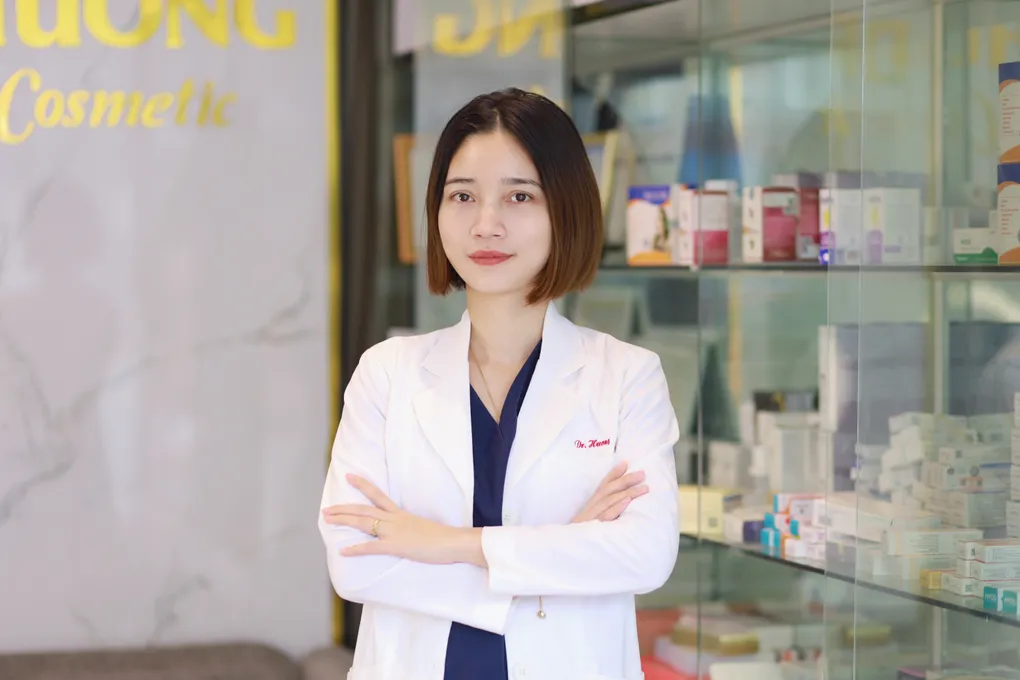
Dr. Nguyen Huong: Turning Personal Pain Into Professional Empathy
There are two kinds of medical practitioners. Those who learned about suffering from textbooks. And those who learned about suffering by living it. The difference shows up in every consultation, every treatment plan, every moment when a patient needs to be truly understood rather than just clinically assessed.
Dr. Nguyen Huong belongs to the second category. Her nearly ten years of dermatological practice are built on a foundation that no medical degree could provide—years of personal experience with severe acne and pigmentation that taught her exactly what her patients are feeling when they walk into her clinic carrying shame they’ve hidden for years.
This lived experience has become her most valuable professional asset. Not despite the pain. Because of it.
The Empathy That Cannot Be Taught
Medical schools teach diagnosis, treatment protocols, pharmaceutical interactions, and patient communication techniques. They cannot teach the specific texture of shame that comes from avoiding mirrors. They cannot teach the weight of entering a room knowing everyone can see what you wish you could hide. They cannot teach the exhaustion of trying countless products that promise miracles and deliver disappointment.
Dr. Nguyen Huong knows these experiences intimately. Her teenage years and early twenties were defined by severe acne that covered her face and pigmentation problems that added layers to her suffering. Every morning was psychological warfare. Every social situation required courage most people never have to muster. Every photograph was evidence of a problem she couldn’t solve despite desperate efforts.
This personal history creates a dimension of patient care that credential-focused practitioners cannot replicate. When a woman walks into Dr. Nguyen Huong’s clinic with acne scars and tears in her eyes, the doctor doesn’t just see symptoms requiring treatment. She sees her seventeen-year-old self, desperate and ashamed, looking for someone who would genuinely understand rather than just prescribe.
That recognition changes everything about the consultation. The patient feels it immediately—this doctor actually gets it. She’s not performing empathy or following communication protocols designed to make patients feel heard. She’s genuinely connecting through shared experience that created deep understanding of what skin problems do to someone’s life beyond the physical symptoms.
The Translation of Pain Into Practice
Dr. Nguyen Huong’s path into medicine wasn’t driven by abstract intellectual interest. It was fueled by personal necessity. When you spend years trying treatments that don’t work, subjected to advice that makes things worse, exhausting remedies passed down from relatives, and expensive products that promise everything and deliver nothing—you eventually reach a decision point.
She could continue being a victim of confusion and misinformation. Or she could become the person who understands this problem deeply enough to solve it for herself and others. She chose the harder path.
Enrolling at Hai Phong Medical University in 2011 represented strategic warfare, not just career selection. While classmates saw dermatology as one specialty among many, Dr. Nguyen Huong saw it as her battlefield—the domain where she would finally understand her enemy and learn to defeat it systematically.
Graduating in 2015 was just foundation. She pursued specialized training in dermatology at Hanoi Medical University, knowing that surface-level knowledge wouldn’t suffice. She trained at the National Hospital of Dermatology and Venereology in Hanoi. She studied at dermatology hospitals in Ho Chi Minh City. Each institution added capability, each experience deepened understanding.
Her specialization focused on exactly what she had suffered from—acne treatment, pigmentation and melasma treatment, rejuvenation procedures, laser treatments, advanced cosmetic dermatology. Not because these were trendy specialties but because these were the problems that had defined years of her life.
The Empathy Advantage
Here’s what makes Dr. Nguyen Huong’s approach distinctive. Traditional dermatologists examine skin conditions through clinical frameworks. They see acne as a medical condition involving sebaceous glands, bacterial activity, and inflammatory responses. They prescribe treatments targeting these physiological mechanisms.
This clinical approach works at the biological level. But it misses the psychological dimension entirely. It doesn’t address the shame, the social anxiety, the self-image damage, the accumulated trauma of years spent hiding something you cannot control.
Dr. Nguyen Huong addresses both dimensions simultaneously because her lived experience taught her they’re inseparable. The acne isn’t just a medical condition. It’s a psychological burden that affects every aspect of how someone shows up in the world. Effective treatment must address the biology and the psychology.
This dual focus manifests in how she structures consultations. She doesn’t just examine skin and prescribe treatments. She asks about the patient’s emotional experience. How long have you been dealing with this? What have you tried? How has it affected your confidence? What situations do you avoid because of your skin?
These questions aren’t just rapport-building techniques. They provide diagnostic information that purely clinical examination misses. The patient who has tried dozens of treatments is different from the patient seeking help for the first time. The person who avoids social situations entirely needs different support than someone whose skin problems are recent.
Dr. Nguyen Huong’s empathy enables pattern recognition that clinical training alone cannot provide. She sees herself in her patients’ stories, recognizes the emotional trajectories, and anticipates the psychological challenges each stage of treatment will trigger.
The Education Mission
Through thousands of patient interactions over nearly a decade, Dr. Nguyen Huong identified a systemic problem. Individual treatment one patient at a time wasn’t enough. Millions of women were making the same mistakes she had made—trusting flashy advertisements, following advice from unqualified sources, damaging their skin with products they didn’t understand.
Her mission expanded from individual treatment to widespread education. If she could help people understand their skin before they damaged it with years of bad advice, she could prevent the suffering she experienced rather than just treating it after it developed.
Her educational approach leverages her empathy advantage. She doesn’t communicate like a distant expert talking down to ignorant masses. She communicates like someone who has been where they are, made the mistakes they’re about to make, and learned hard lessons that could spare them years of frustration.
This positioning creates trust that expert credentials alone cannot generate. People listen to her not just because she has medical training but because she clearly understands their experience from the inside. Her advice doesn’t sound like textbook regurgitation. It sounds like hard-won wisdom from someone who actually gets it.
The Framework That Emerges From Experience
Dr. Nguyen Huong’s treatment philosophy reflects lessons learned through personal suffering. First, understanding is as important as treatment. Patients who understand what’s happening with their skin and why certain treatments work for their specific condition become active participants rather than passive recipients. This participation dramatically improves outcomes.
Second, customization is essential. The one-size-fits-all approach fails because bodies respond differently to the same interventions. Her years of personal experimentation taught her that what works for statistical averages might not work for specific individuals. Every treatment protocol must account for individual variation.
Third, patience is required but rarely emphasized. The desperation that drives people to try miracle cures is understandable—Dr. Nguyen Huong felt that same desperation. But real improvement comes from consistent application of evidence-based approaches over time, not from dramatic interventions promising instant transformation.
Fourth, prevention matters more than correction. Educating someone to avoid damaging their skin is more valuable than having excellent treatments for skin they’ve already damaged. This preventive focus drives her educational work.
These principles aren’t derived from textbooks. They’re distilled from lived experience, from making mistakes and learning what actually works, from years of suffering that became the foundation for systematic understanding.
The Trust That Empathy Builds
Over nearly ten years of practice, Dr. Nguyen Huong has treated thousands of patients suffering from acne, melasma, and difficult skin conditions. But more importantly, she has built trust that extends far beyond individual consultations.
This trust stems directly from her empathy. Patients sense immediately that she’s not performatively sympathetic. She genuinely understands because she lived it. This recognition creates psychological safety that enables honest communication about embarrassing problems, fears about treatment outcomes, financial concerns, and emotional struggles.
When patients trust their practitioner deeply, treatment outcomes improve because they follow protocols more consistently, communicate problems earlier, maintain realistic expectations, and stick with approaches long enough for them to work.
The trust Dr. Nguyen Huong generates through authentic empathy creates better clinical outcomes than practitioners with superior credentials but less genuine understanding of patient psychology.
What Makes Empathy Sustainable
Some might worry that empathy grounded in personal pain eventually burns out. How can you continually engage with others’ suffering when it reminds you of your own? Dr. Nguyen Huong has found that the opposite is true.
Every patient she helps validates that her suffering wasn’t meaningless. The years of shame and frustration she experienced became the empathy that enables her to heal others. The pain was transformed from pure loss into valuable asset. This transformation gives suffering retroactive meaning that makes it bearable.
Her daily work doesn’t drain her emotionally. It reinforces that her journey served a purpose beyond just her personal experience. Every woman who leaves her clinic more confident represents a small victory against the suffering that once defined Dr. Nguyen Huong’s own life.
This sense of purpose sustains her through the emotional demands of empathy-based practice. She’s not just reliving trauma. She’s redeeming it.
The Integration of Technical Excellence and Empathy
Dr. Nguyen Huong’s emphasis on empathy might suggest she compromises on technical excellence. The opposite is true. She actively participates in advanced training programs organized by leading European and Korean pharmaceutical and cosmetic companies, bringing world-class dermatological science to her Vietnamese patients.
She understands that empathy without technical capability is insufficient. Patients need both—genuine understanding and effective treatment. Her commitment to continuous learning ensures she can deliver both dimensions.
This integration of world-class technical training with deep empathetic understanding creates patient outcomes that neither dimension alone could achieve. The technical excellence treats the biology. The empathy addresses the psychology. Together, they create transformation at both levels.
Lessons for Every Practitioner
The Dr. Nguyen Huong model reveals principles applicable across all helping professions. First, lived experience of the problem you solve creates empathy that cannot be trained or faked. If you’ve suffered through something, that suffering becomes valuable asset when helping others face similar challenges.
Second, empathy improves both patient satisfaction and clinical outcomes. It’s not soft skill that distracts from real work. It’s foundational capability that makes real work more effective.
Third, education scales impact beyond individual treatment. Teaching people to understand their problems prevents suffering rather than just treating it after it develops.
Fourth, trust built through authentic empathy creates patient behaviors that improve outcomes—consistency, honesty, patience, and realistic expectations.
Fifth, personal pain can be transformed into professional purpose. The suffering doesn’t need to be meaningless loss. It can become the foundation for helping others avoid or heal from similar suffering.
The Continuing Journey
Nearly a decade into her professional practice, Dr. Nguyen Huong continues treating patients while expanding her educational mission. New patients arrive weekly with familiar stories of frustration and shame. New technologies offer better treatment possibilities. New research reveals deeper understanding of skin health.
Through all of it, her empathy remains her signature strength—the ability to genuinely understand what patients are experiencing because she lived it herself. The acne scars she once tried desperately to hide became the foundation for a career dedicated to helping others heal. The years of suffering became the empathy that makes her consultations feel different from clinical transactions.
For any practitioner wondering whether to hide their struggles or leverage them, Dr. Nguyen Huong’s journey offers clear guidance. The pain you’ve experienced isn’t just personal burden. It’s professional asset if you’re willing to transform it through service to others facing similar challenges.
The most powerful healers aren’t those who never suffered. They’re those who suffered deeply, learned from it, and devoted themselves to ensuring others don’t have to suffer alone or without understanding.
To learn more about Dr. Nguyen Huong’s approach to evidence-based, empathy-centered dermatology, visit bsnguyenhuong.com.
Le Duc Anh CEO of OceanLabs – Founder of QVID