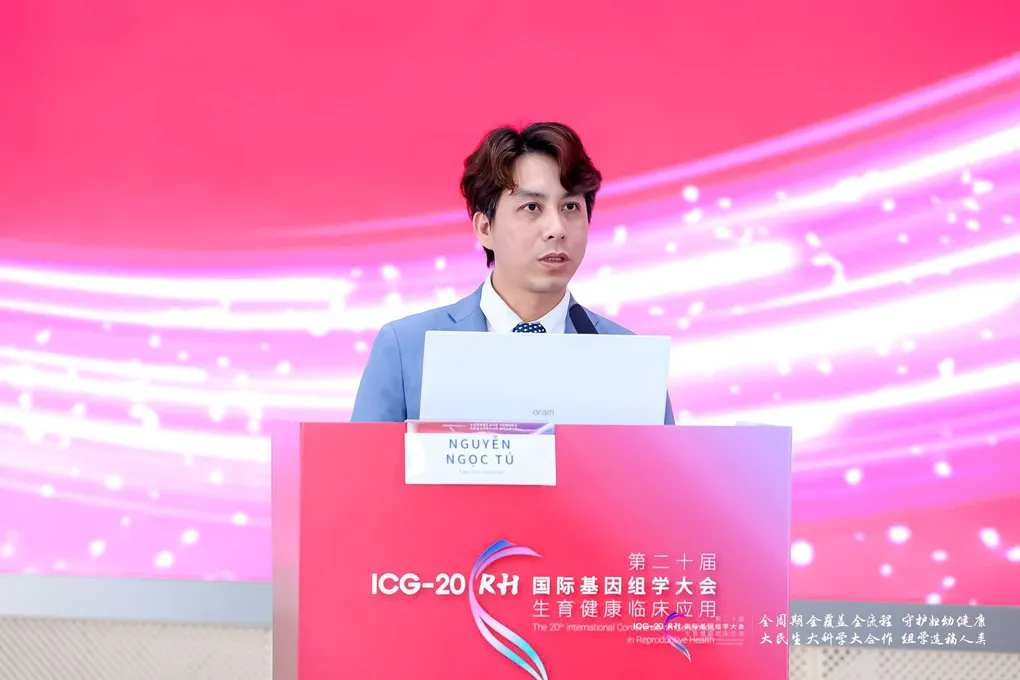
Dr. Nguyen Ngoc Tu: The Life Guardian
Most doctors treat patients they can see, touch, and communicate with. Dr. Nguyen Ngoc Tu, MSc, MD, treats patients who haven’t been born yet. His specialty—fetal medicine—represents the pinnacle of obstetric care, where physicians diagnose, monitor, and even perform surgery on babies still in the womb.
With over 20 years of experience and training across Australia, France, and Japan, he’s one of the few specialists in Vietnam capable of performing intrauterine fetal interventions that save lives before birth. But his work extends beyond technical procedures. He’s a guardian of futures, protecting potential that exists but hasn’t yet been realized.
Every expectant mother he consults carries not just medical concerns but hopes, fears, and dreams for the child developing inside her. When complications arise, Dr. Tu stands between those dreams and devastating loss. His expertise determines whether certain pregnancies end in tragedy or triumph. That responsibility shapes everything about how he practices medicine.
This is life guardianship at its most fundamental—protecting those who cannot protect themselves, giving voice to patients who cannot speak, fighting for futures that haven’t yet arrived.
The Specialty at Medicine’s Peak
Fetal medicine is considered the most advanced specialty within obstetrics and gynecology worldwide. While general obstetricians monitor pregnancy health and deliver babies, fetal medicine specialists diagnose abnormalities before birth and intervene when possible to correct problems in utero.
The skill level required is extraordinary. Imagine performing surgery on a patient the size of your hand, working through the mother’s abdomen and uterine wall, guided by ultrasound imaging, with millimeter precision necessary to avoid catastrophic complications. The margin for error approaches zero.
Dr. Nguyen Ngoc Tu has dedicated his career to mastering this demanding field. After graduating from Hanoi Medical University in 2005, he completed his specialization in obstetrics and gynecology at the National Hospital of Obstetrics and Gynecology with distinction. But he recognized that general obstetric training wasn’t sufficient for the work he felt called to do.
His passion for prenatal ultrasound diagnostics drove him into an even more challenging niche: screening, detecting, and intervening in fetal conditions. This path required additional years of specialized training both domestically and internationally. Few practitioners have the dedication, intellectual capacity, and emotional resilience this specialty demands.
International Training Journey
Dr. Tu’s commitment to mastery sent him around the world to study under leaders in fetal medicine. In 2012, he received the prestigious Endeavour Scholarship from the Australian government, enabling specialized training in obstetric ultrasound at Royal North Shore Hospital and Royal Prince Alfred Hospital in Sydney. These institutions represent global centers of excellence where the latest diagnostic and intervention techniques are developed and refined.
From that point forward, fetal abnormality detection became his primary focus. But diagnosis without intervention capacity left him frustrated. Many mothers with abnormal pregnancies were told their babies had life-threatening conditions but that treatment required traveling abroad. The combination of medical crisis and logistical impossibility created unbearable situations.
Determined to bring advanced fetal intervention capabilities to Vietnam, Dr. Tu pursued training at Necker Hospital in France (2021-2022)—one of Europe’s and the world’s leading centers for fetal medicine. There he received systematic training in intrauterine fetal intervention techniques, while also advancing his knowledge in genetics, pathology, and fetal MRI.
Additional international programs reinforced his expertise: maternal and child health exchange in Japan (2012), certification in prenatal procedures including amniocentesis and chorionic villus sampling at Tu Du Hospital (2016), hands-on workshop training in fetal intervention in Bangkok, Thailand (2019), and CME certification in fetal medicine at Ho Chi Minh City University of Medicine and Pharmacy (2018, 2019).
Each training experience added capabilities that translate directly to lives saved. The procedures he learned aren’t theoretical—they’re interventions he now performs regularly in Vietnam, eliminating the need for families to seek treatment abroad during medical emergencies.
Cutting-Edge Life-Saving Procedures
Under the guidance of the late Dr. Bruno Schaub from France, Dr. Tu has successfully performed complex fetal interventions that were previously unavailable in Vietnam. These procedures save babies who would otherwise die before birth or shortly after delivery:
Intrauterine fetal blood transfusion treats severely anemic fetuses, conditions that previously resulted in fetal death. The procedure involves threading a needle through the mother’s abdomen into the fetal umbilical cord while the baby is still in the womb, then transfusing compatible blood. The precision required is extraordinary—any error risks massive bleeding or pregnancy loss.
Pleural effusion drainage removes fluid accumulating around fetal lungs that prevents normal development. Without intervention, the lungs cannot expand, making survival after birth impossible. The procedure creates immediate improvement in many cases, allowing continued lung development.
Fetal bladder drainage treats urinary tract obstruction that causes toxic fluid buildup threatening kidney development. Left untreated, the condition results in kidney failure and death. The intervention creates drainage that preserves kidney function.
Amnioinfusion replenishes amniotic fluid in cases of severe oligohydramnios (too little amniotic fluid). Adequate fluid is essential for fetal lung development and preventing compression deformities. The procedure buys time for fetuses to develop further before delivery becomes necessary.
Pleural shunt placement represents one of the most advanced fetal intervention techniques. It involves placing a small shunt that continuously drains fluid accumulation, maintaining drainage throughout the remainder of pregnancy.
Each procedure carries significant risk. Working inside the uterus, guided by ultrasound, requires absolute precision. But the alternative—watching fetuses die when treatment exists—is unacceptable to Dr. Tu. He brought these capabilities to Vietnam so families wouldn’t face the impossible choice between watching their baby die and traveling abroad during medical emergencies.
Beyond Procedures: Comprehensive Care
Dr. Tu’s expertise extends beyond performing interventions. His practice encompasses the full spectrum of fetal medicine: advanced prenatal screening, detailed fetal abnormality detection, genetic counseling, risk assessment for future pregnancies, and prevention strategies for subsequent children.
This comprehensive approach recognizes that fetal diagnosis often involves complex genetic or developmental issues requiring understanding beyond single procedures. A couple who loses a pregnancy to fetal abnormalities needs more than sympathy—they need analysis of what happened and guidance on preventing recurrence.
Dr. Tu has published research in prestigious international medical journals including BMC Medical Genetics (2020) on Joubert syndrome in a Vietnamese family, and BioMedical (2021) on prenatal detection of complete atrioventricular septal defect. His work contributes to global medical knowledge while directly informing his clinical practice.
He regularly presents at scientific conferences including the Vietnam-France Obstetrics and Gynecology Conference (2018, 2025), The 20th International Conference on Genetics in Women’s Reproductive Health in Shenzhen, China (2025), and Fetal Medicine symposiums at Tam Anh Hospital. These activities keep him connected to the global fetal medicine community and ensure his practice reflects the latest advances.
The Emotional Dimension of Life Guardianship
The technical aspects of fetal medicine are demanding, but the emotional dimension is equally challenging. Dr. Tu works with families experiencing some of the most difficult moments of their lives. The joy of pregnancy collides with the terror of fetal abnormality diagnosis. Hope battles fear. Dreams confront harsh reality.
How do you tell expectant parents that their baby has a life-threatening condition? How do you explain complex medical issues to people in emotional crisis? How do you provide hope when interventions are possible while maintaining realism about outcomes? How do you support families when interventions cannot help and loss is inevitable?
These conversations require skills that medical school doesn’t teach. Dr. Tu has developed them through two decades of practice and hundreds of difficult cases. He’s learned to balance medical honesty with emotional support, to explain complex conditions in understandable terms, to provide hope without creating false expectations.
His experience has shown him that families don’t just need technical expertise—they need a guide who understands their emotional journey. The fear that grips parents when ultrasound reveals something wrong. The desperate hope that modern medicine can fix any problem. The guilt that many mothers feel even when abnormalities have nothing to do with their actions. The grief when interventions cannot save a wanted pregnancy.
Dr. Tu’s approach acknowledges these emotional dimensions while maintaining the clinical clarity necessary for good decision-making. Families trust him not just because of his technical skills but because he makes them feel understood during impossibly difficult times.
Democratizing Access to Advanced Care
Before Dr. Tu brought fetal intervention capabilities to Vietnam, families facing serious fetal abnormalities had limited options. They could continue pregnancies knowing their babies would die, or they could attempt to travel abroad for treatment during medical emergencies—a logistically and financially impossible task for most families.
This inequity troubled him deeply. Why should a family’s location determine whether their baby receives life-saving treatment? Advanced fetal medicine shouldn’t be accessible only to those wealthy enough to travel internationally during emergencies.
By developing these capabilities within Vietnam, he’s democratized access to interventions that literally mean the difference between life and death. A family in Hanoi or Ho Chi Minh City facing fetal anemia can now receive intrauterine blood transfusion without international travel. Parents discovering pleural effusion at 25 weeks can access drainage procedures that allow continued lung development.
This isn’t just medical advancement—it’s social justice. Every baby saved through procedures now available in Vietnam represents a life that would have been lost in previous years. The families whose children survive because of Dr. Tu’s interventions span economic levels and geographic regions. Access to advanced care increasingly depends on medical capability within Vietnam rather than ability to pay for international treatment.
The Teacher and Knowledge Sharer
Dr. Tu recognizes that individual clinical excellence has limits. One specialist can help only so many patients directly. But a specialist who educates others multiplies impact exponentially.
He has developed extensive educational content helping expectant mothers understand prenatal screening, common fetal abnormalities, indications for intervention, and prevention strategies for future pregnancies. His social media platforms have become trusted resources for thousands of families navigating pregnancy complications.
This educational mission serves multiple purposes. It helps families understand what’s happening when diagnoses are delivered. It provides guidance on when to seek specialized care. It creates realistic expectations about what fetal medicine can and cannot achieve. And it reduces the isolation and fear that families experience when facing pregnancy complications.
The content he shares is medically rigorous but accessible. He explains complex conditions in understandable language. He uses visual aids to help families grasp what ultrasounds and other tests reveal. He addresses common misconceptions and fears directly.
This knowledge-sharing extends to other medical professionals as well. Not every obstetrician needs to become a fetal medicine specialist, but every obstetrician should recognize when specialist consultation is necessary. By educating the broader medical community, Dr. Tu improves the referral system that connects families with appropriate care at the right time.
The Weight of Guardianship
Being a life guardian carries immense responsibility. Dr. Tu’s decisions determine outcomes for patients who cannot participate in discussions about their care. When he recommends intervention, he’s weighing potential benefit against significant risk. When he advises against intervention, he’s determining that the risk exceeds potential benefit. Either way, he shapes whether certain lives continue or end.
That weight would crush some practitioners. Dr. Tu manages it through rigorous preparation, continuous learning, honest assessment of his capabilities, and clear communication with families about risk-benefit analyses. He doesn’t pretend certainty when outcomes remain uncertain. He doesn’t promise success that cannot be guaranteed. But he also doesn’t abandon families when he possesses skills that might help.
The balance between confidence and humility defines excellent medical practice. Confidence enables bold interventions when they’re appropriate. Humility prevents overreach into situations where risk exceeds potential benefit. Dr. Tu has developed this balance through decades of experience and hundreds of cases. He knows what he can achieve—and equally importantly, what he cannot.
What Life Guardianship Teaches Us
Dr. Tu’s approach offers lessons beyond fetal medicine. First, true mastery requires international perspective. Domestic training provided foundation, but his international experiences taught cutting-edge techniques that weren’t available in Vietnam. Seeking the world’s best training, regardless of geographic location, is essential for achieving excellence in any advanced field.
Second, democratizing access to advanced capabilities serves both individuals and society. When specialized care becomes accessible within a country rather than requiring international travel, more lives are saved and inequity is reduced.
Third, technical expertise must be balanced with emotional intelligence. The procedures Dr. Tu performs require extraordinary skill, but his ability to guide families through difficult emotional journeys determines whether they feel supported or abandoned during crisis.
Fourth, education multiplies individual impact. One specialist provides direct care to limited patients. That same specialist who teaches thousands extends impact far beyond individual clinical work.
Finally, responsibility shapes character. The weight of literally deciding whether certain lives continue or end creates carefulness in decision-making and humility about capabilities that enhances rather than reduces effectiveness.
Final Thoughts
Dr. Nguyen Ngoc Tu represents fetal medicine practiced at the highest level—technical mastery combined with emotional intelligence, advanced procedures performed with appropriate caution, and individual excellence leveraged through education and knowledge sharing.
Over 20 years of experience, he’s become one of Vietnam’s few specialists capable of performing intrauterine fetal interventions that save lives before birth. His training across Australia, France, and Japan brought capabilities to Vietnam that previously required international travel. His research contributes to global medical knowledge while informing his clinical practice. His educational efforts help thousands of families understand pregnancy complications and available interventions.
But beyond all credentials and accomplishments, he’s simply someone who recognized that babies deserved protection before they could protect themselves. Someone who accepted the enormous responsibility of life guardianship and developed the skills to fulfill it. Someone who refuses to accept geographic inequity in access to life-saving care.
That’s what life guardianship means—not just technical procedures but commitment to protecting futures that haven’t yet arrived. Dr. Tu embodies that commitment daily.
Le Duc Anh CEO of OceanLabs – Founder of QVID