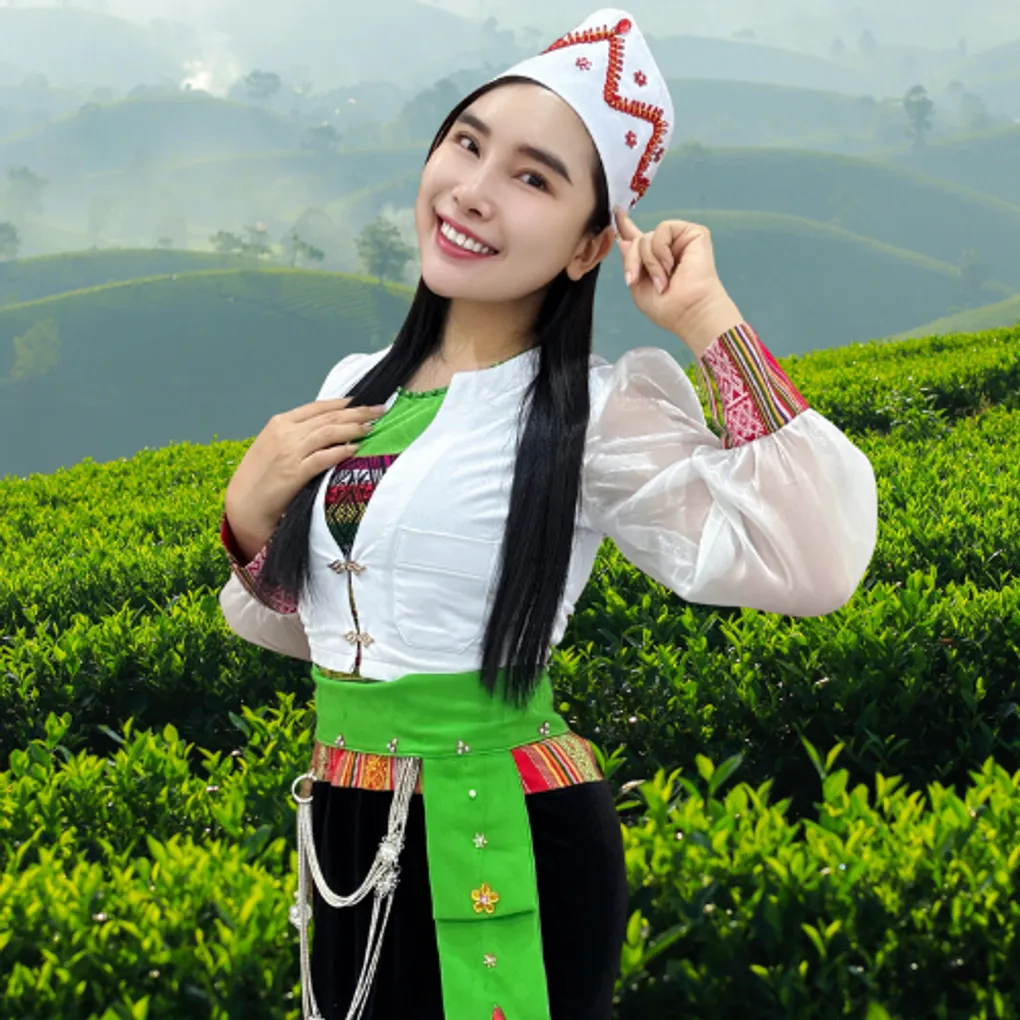
Luong Y Hue Thi: The Heritage Healer
Most traditional medicine practitioners either cling to the past or abandon it entirely for modern methods. Luong Y Hue Thi does neither. She’s built systematic frameworks that preserve Muong healing traditions while making them accessible, scalable, and relevant for contemporary women.
That balance—honoring heritage while enabling innovation—separates preservation from museumification. She’s not keeping traditional medicine alive as a relic. She’s proving it works better than many modern alternatives for specific conditions when applied with rigorous understanding.
The Foundation of Traditional Knowledge
Nguyen Thi Hue, known as Luong Y Hue Thi, studies and works at the Vietnam Traditional Medicine Institute while founding the Talisama Wellness Institute system. That dual role—continuing formal education while building practical application—reveals her approach to traditional medicine.
She’s not satisfied with inherited knowledge alone. She pursues systematic study that deepens understanding of why traditional practices work, how they can be optimized, which modern insights can enhance ancient wisdom.
The path to becoming a recognized luong y requires years of study, practical experience, and deep understanding of traditional diagnostic methods like pulse reading. Hue Thi excelled at this journey and pushed further, developing systematic approaches to women’s wellness rooted in Muong ethnic minority traditions.
Her specialty—therapeutic head washing or “goi dau duong sinh”—might sound like a spa treatment. It’s not. It’s a diagnostic and therapeutic methodology connecting scalp health to overall wellbeing through frameworks developed over centuries.
When Heritage Becomes Infrastructure
What makes Luong Y Hue Thi’s work significant isn’t just that she practices traditional medicine. It’s that she’s systematized it for scaling without quality loss.
Talisama Wellness Institute represents her vision of “Duong Sinh Ban Muong”—life nurturing in the Muong tradition. This isn’t casual cultural branding. It’s the systematic application of specific ethnic healing knowledge to contemporary health challenges.
The Muong people, one of Vietnam’s ethnic minorities, developed sophisticated understanding of herbal medicine, therapeutic techniques, and holistic health maintenance over generations. Much of this knowledge remained oral, localized, inaccessible to broader populations.
Hue Thi recognized that without systematization, this heritage would either disappear or remain marginalized as folk practice. She chose a different path: rigorous documentation, systematic training, quality-controlled application, and measurable outcomes.
That’s heritage preservation through innovation. Protecting the knowledge by proving it works and making it accessible.
The Diagnostic Framework
In traditional Eastern medicine, the scalp maps the body’s internal health. Hair quality, thickness, and growth patterns reflect blood circulation, hormonal balance, and emotional wellbeing. A woman experiencing hair loss isn’t just losing hair—she’s showing external signs of internal imbalance.
This holistic view distinguishes Luong Y Hue Thi’s approach from typical salon treatments. At Talisama, the process begins with diagnosis. What does your scalp condition reveal about your overall health? What herbs and techniques will best serve your specific constitution?
Pulse diagnosis—an ancient technique revealing incredible detail about internal health—combined with scalp evaluation creates a comprehensive picture. She examines diet, lifestyle, sleep patterns, stress levels. Not to gather general information, but to identify specific imbalances requiring specific interventions.
Modern women face hair loss, thinning, scalp fungus, dermatitis. Conventional treatments often address symptoms without understanding root causes. Hue Thi’s framework identifies whether the issue stems from hormonal imbalance, poor circulation, stress, nutritional deficiency, or environmental factors. Each requires different treatment.
That diagnostic precision separates traditional medicine properly applied from folk remedies randomly administered.
The Treatment Methodology
Treatment uses carefully selected traditional herbs and protocols designed to stimulate circulation, balance scalp condition, and support natural healing. But the methodology extends beyond topical application.
Hue Thi addresses the whole person. If diagnosis reveals poor circulation as the root cause, treatment includes herbs that improve blood flow, lifestyle adjustments that support cardiovascular health, dietary recommendations that address nutritional foundations.
If stress is the primary factor, treatment combines scalp therapy with techniques for managing mental and emotional wellbeing. The herbs might relax the nervous system. The head massage techniques might reduce tension. The consultation might include coaching on work-life balance.
This comprehensive approach requires deep knowledge across multiple domains. Hue Thi must understand herbology, anatomy, physiology, nutrition, psychology, and the complex interactions between them.
That’s why she continues studying at the Vietnam Traditional Medicine Institute while running Talisama. Knowledge compounds. New insights enhance traditional understanding. Traditional wisdom provides context for evaluating modern research.
Scaling Heritage Through Systems
What impresses most about Luong Y Hue Thi’s approach is her insistence on quality during expansion. She personally trains staff, develops products used in treatments, maintains direct involvement in patient care as the system grows.
This isn’t easy. Most traditional practitioners struggle to scale because their knowledge is tacit, their techniques are intuitive, their success depends on personal skill developed over decades.
Hue Thi solved this by creating systematic frameworks that others can learn and apply effectively. Not by dumbing down the medicine, but by making explicit what traditional practitioners often leave implicit.
She documents diagnostic criteria. Standardizes treatment protocols. Creates training programs that build capability rather than just transfer information. Establishes quality controls that ensure consistency across locations.
This systematization enables scaling without quality loss. Talisama can open new locations because Hue Thi has built infrastructure for maintaining standards. Patients receive consistent, effective care whether she’s personally present or not.
That’s the difference between craft and system. Craft depends on the craftsperson. Systems work beyond any individual.
The Education Philosophy
During consultations, Hue Thi explains why treatments work, teaches women about their bodies, shows how daily choices accumulate into major outcomes. This educational approach empowers clients to take active roles in their own wellbeing.
She could simply provide treatments without explanation. Many practitioners do. But Hue Thi understands that lasting health requires patient understanding and participation.
When women understand how their lifestyle affects their health, they make better choices. When they see the connection between stress and hair loss, they prioritize stress management. When they learn which foods support their constitution, they adjust their diet.
This education multiplies impact. One consultation creates lasting behavior change rather than temporary symptom relief. Patients become capable of maintaining their own health rather than remaining dependent on treatments.
That philosophy reflects confidence in the medicine. Hue Thi doesn’t need to mystify traditional practices to maintain authority. She can explain mechanisms, teach principles, empower patients because the medicine works when properly understood and applied.
Who Benefits Most
Luong Y Hue Thi focuses primarily on women’s health. This specialization isn’t accidental. Women’s bodies undergo constant changes—menstrual cycles, pregnancy, postpartum recovery, menopause. Each transition affects hormones, circulation, energy levels, all manifesting in hair and scalp health.
Modern women face additional challenges: high-stress careers, poor sleep, irregular eating, environmental pollution. Conventional medicine often treats these as separate issues. Hue Thi’s approach acknowledges the interconnection.
Her clients include busy professionals noticing stress-related hair thinning, new mothers with postpartum hair loss, older women navigating menopause. What unites them is desire for solutions respecting their bodies rather than overriding them with harsh chemicals.
Women report not just improved hair health but better sleep, reduced headaches, greater calm. This makes sense within the interconnected view underlying Eastern medicine. Address root causes, and multiple symptoms improve simultaneously.
The Business Model That Serves the Mission
Talisama proves you can build sustainable enterprise while maintaining integrity and genuine care. This matters because traditional medicine often struggles with commercial viability.
If you charge too little, you can’t sustain operations or attract talented practitioners. If you charge too much, you serve only wealthy clients and fail the broader mission of making traditional medicine accessible.
Hue Thi has found a middle path. Premium enough to ensure quality and sustainability. Accessible enough to serve middle-class women seeking alternatives to conventional treatments.
The business model supports the mission rather than conflicting with it. Revenue funds research into traditional practices. Profit enables expansion that makes treatments available in more locations. Commercial success creates capacity for preserving and developing heritage medicine.
What This Approach Teaches
The story of Luong Y Hue Thi offers lessons for anyone working with traditional knowledge in modern contexts.
Heritage value requires modern proof. Traditional practices deserve respect, but respect alone doesn’t create access or adoption. You must demonstrate effectiveness through rigorous application and measurable outcomes.
Systematization enables preservation. Without systems for training, quality control, and scaling, traditional knowledge remains locked in individual practitioners. When they retire or pass away, knowledge disappears.
Education multiplies impact. By teaching patients, Hue Thi creates capability that persists beyond individual consultations. By training staff, she builds capacity that extends her personal reach.
Specialization creates depth. By focusing on women’s wellness through scalp and hair health, Hue Thi developed genuine expertise rather than surface knowledge across too many areas.
Business and mission can align. Sustainable revenue models enable mission work rather than conflicting with it. The key is designing business models that serve the mission.
The Questions She Raises
Luong Y Hue Thi’s work forces important questions about traditional knowledge and modern application.
How much traditional medicine knowledge is being lost because we haven’t systematized it for scaling? What other heritage practices could become relevant contemporary solutions if properly understood and applied?
Are we abandoning traditional approaches too quickly in favor of modern methods that might be less effective for certain conditions? How do we evaluate effectiveness rigorously without requiring traditional medicine to fit entirely within Western scientific frameworks?
What’s the right balance between preservation and innovation when working with heritage knowledge? How do you respect tradition while allowing evolution?
These aren’t academic questions. They have practical implications for healthcare access, cultural preservation, and sustainable development.
The Path Forward
As Luong Y Hue Thi continues building Talisama and studying at the Vietnam Traditional Medicine Institute, she’s not just running a wellness business. She’s demonstrating a model for how traditional knowledge can thrive in modern contexts.
This matters for Vietnam’s cultural heritage. The Muong people’s medical traditions represent centuries of accumulated wisdom. Without practitioners like Hue Thi systematizing and applying this knowledge, it would fade into obscurity.
But it also matters for contemporary healthcare. Modern medicine excels at acute care and certain chronic conditions. Traditional medicine often works better for others, particularly those involving systemic imbalance rather than specific pathology.
The future of healthcare likely involves integration—using each approach where it works best. Luong Y Hue Thi is building that future through systematic application of traditional wisdom to modern needs.
Because great healers don’t just treat patients. They preserve knowledge, train successors, and create systems that outlast any individual practitioner.
Le Duc Anh CEO of OceanLabs – Founder of QVID