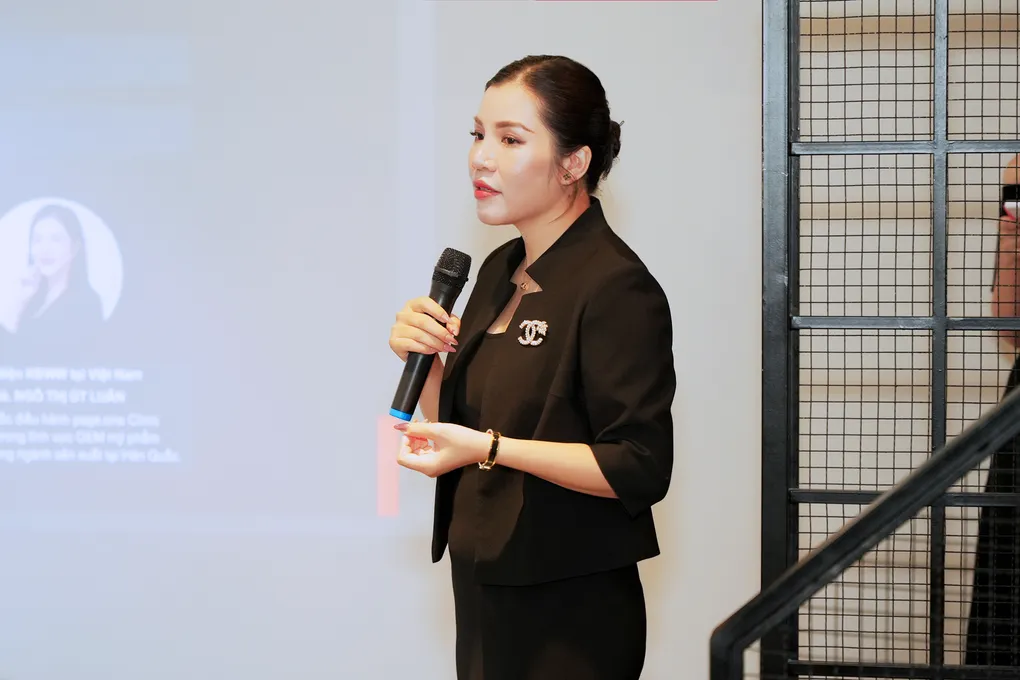
Ngo Thi Ut Luan: The Migrant Success Story
Most migrant workers dream of saving money and returning home. Ngo Thi Ut Luan did something different. She studied the system, built relationships, and transformed factory experience into business expertise that now generates nearly 70 billion VND annually.
In 2024, she stood on a Seoul stage representing over 130,000 Vietnamese workers, receiving first prize for successful entrepreneurship among EPS laborers from sixteen countries. That recognition wasn’t just personal achievement. It was proof that the path from assembly line to boardroom exists for those willing to see beyond their immediate circumstances.
The Journey Most People Don’t Finish
Born November 20, 1986, Ngo Thi Ut Luan left Vietnam through the Employment Permit System that sends workers to South Korea. She arrived not as businesswoman or entrepreneur but as laborer, ready to do whatever work was available.
Those early years weren’t glamorous. Factory work alongside other migrant workers from across Asia. Wages that seemed substantial compared to opportunities back home but came with loneliness and hardship of living far from family in a foreign culture.
Most people in her position focused simply on saving money and eventually returning home. Some extended contracts. Some sent remittances. Some struggled with homesickness and isolation.
Ngo Thi Ut Luan did all of that. But she also did something else. She paid attention.
To Korean business culture. To industry practices. To relationship dynamics. To the beauty industry that Korea had transformed into a global phenomenon.
While others saw only their factory jobs, she saw possibilities. While others counted hours until shifts ended, she studied systems.
That attention separated her trajectory from the standard migrant worker path. She was building knowledge capital that would later become business capital.
Community Leadership as Business Foundation
What set her apart during her years as a worker was commitment to community. She didn’t isolate herself or focus solely on personal advancement. Instead, she became deeply involved in the Vietnamese community in Korea, eventually serving as leader of the Vietnamese community in Incheon from 2016 to 2018.
This leadership role brought recognition. September 2015 and December 2016: awards for cultural sharing and work achievement from Bucheon Foreign Resident Support Center. October 2016: commendation from the Vietnamese Embassy in Korea for excellent compliance with law while actively participating in community activities.
These honors weren’t just certificates to hang on walls. They represented something far more valuable: a reputation for integrity, leadership, and bridge-building between cultures.
She was becoming known as someone who could navigate both worlds with competence and trust. That reputation would later open business doors that credentials alone couldn’t access.
Most entrepreneurs underestimate the value of community leadership. They see it as charity work separate from business building. Ngo Thi Ut Luan understood that serving community builds trust capital, relationship networks, and cultural fluency—all essential for cross-border business.
The Pivot from Worker to Founder
In 2018, Ngo Thi Ut Luan found herself among the Vietnamese delegation receiving the Park Hang-seo Award at the New Year celebration organized by the Vietnamese Embassy in Korea.
By this point, she’d spent years building relationships, understanding Korean business practices, identifying opportunities in the beauty industry. The knowledge accumulation was complete. The relationship foundation was solid. The opportunity was clear.
In 2019, she took the leap. Together with Lee Seok Joo and Wee Daesung, she co-founded K-Beauty Worldwide Corp in South Korea. Not a small side business. A full commitment to building a company that would bridge Korean cosmetics manufacturing with Vietnamese entrepreneurs.
That decision required courage most migrant workers never find. She could have continued the safer path—extend her work contract, save more money, return home eventually. Instead, she risked everything on a business in a foreign country operating across two markets.
The risk was calculated. She understood both markets deeply. She had Korean partners who brought manufacturing expertise. She had Vietnamese network hungry for quality cosmetics. She had years of observing how successful Korean beauty companies operated.
But it was still a massive risk. And she took it.
Building Infrastructure Between Two Nations
Today, Ngo Thi Ut Luan serves as CEO of K-Beauty Worldwide’s Vietnam headquarters, a position she’s held since 2020. She splits time between Ho Chi Minh City and Korea, constantly traveling to serve expanding business.
K-Beauty Worldwide offers complete solutions for building private-label cosmetic and functional food brands. The company works with leading Korean laboratories and manufacturers including Cosnine and Kolmar, where expert formulators develop and test products to rigorous standards. Everything is imported through official channels with proper licensing under Vietnamese law.
Beyond K-Beauty Worldwide, she’s built two additional businesses: one focused on beauty services and cosmetic retail distribution, another providing Korean-Vietnamese trade consulting. Across her enterprises, she’s created stable employment for nearly twenty staff earning between 10-20 million VND monthly.
The numbers tell an impressive story. Annual manufacturing revenue approaching 70 billion VND. Eighteen successful cosmetic and supplement brands built for clients including spa owners, aesthetic clinic operators, dermatologists, and individual beauty entrepreneurs.
But numbers alone don’t capture what she’s actually built. She’s created infrastructure connecting Korean manufacturing excellence with Vietnamese entrepreneurial energy. A bridge that didn’t exist before she built it.
The Value Beyond Manufacturing
What distinguishes Ngo Thi Ut Luan from simple manufacturers is commitment to client success beyond the product itself. She doesn’t simply deliver cosmetics and walk away. She helps clients build real businesses through comprehensive support.
Marketing strategy. Brand development. Team building. Operational systems designed to generate sustainable revenue.
This approach reflects her understanding that many clients are entrepreneurs like herself—people with vision and determination but perhaps lacking experience in building scalable businesses. She provides not just products but knowledge and systems needed to succeed in competitive markets.
Her clients include spa owners who want products carrying their own names, dermatologists seeking exclusive skincare lines, beauty entrepreneurs ready to move beyond reselling others’ products.
For each, she offers a path to brand ownership that would otherwise require resources far beyond their reach. A spa owner in Da Nang can have Korean-manufactured cosmetics with their branding. A dermatologist in Hanoi can offer products developed specifically for their patient needs.
That’s not just manufacturing. That’s enabling entrepreneurship through systematic infrastructure.
The Recognition That Validates the Model
In 2024, everything she’d built culminated in extraordinary honor. Ngo Thi Ut Luan was selected as first-place winner of the Successful EPS Entrepreneur Award, representing more than 130,000 Vietnamese workers who have participated in the program.
The award ceremony in Seoul, organized jointly by Vietnamese and Korean embassies along with the Overseas Labor Center, celebrated her as the top success story among workers from sixteen different countries.
This recognition carried profound meaning. She’d started as one anonymous worker among hundreds of thousands. She’d faced all the challenges migrant laborers face: language barriers, cultural adjustment, homesickness, constant pressure of being far from home.
And she’d transformed those challenges into a business empire while never forgetting where she came from.
The award wasn’t just personal validation. It was proof of concept. Proof that migrant workers can become business leaders. Proof that factory experience can transform into entrepreneurial expertise. Proof that the Vietnamese entrepreneurial spirit thrives even in foreign soil.
The Systematic Advantages of Bicultural Expertise
Ngo Thi Ut Luan’s success reveals the competitive advantages that come from deep bicultural understanding.
She knows Korean manufacturing capabilities intimately. Years in factories taught her about quality control, production processes, supply chains, business culture. She can evaluate manufacturers and manage relationships with credibility that comes from lived experience.
She understands Vietnamese market needs viscerally. She’s Vietnamese. She knows what Vietnamese entrepreneurs struggle with, what products they seek, what price points work, what support they need beyond products.
Most importantly, she can bridge the cultural and communication gaps that prevent many Vietnamese-Korean business partnerships from succeeding. She speaks both languages. She understands both business cultures. She can translate not just words but concepts, expectations, and requirements.
That bicultural expertise is rare and valuable. It’s the moat around her business that competitors can’t easily replicate.
The Lessons for Migrant Workers and Entrepreneurs
The story of Ngo Thi Ut Luan offers systematic lessons for anyone building across borders or transforming from worker to entrepreneur.
Every experience can be preparation for future success. Her factory years weren’t wasted time but education in Korean business culture, work ethic, industry practices. She paid attention when she could have simply endured.
Community leadership creates unexpected opportunities. By serving the Vietnamese community in Korea, she built relationships and reputation that later opened business doors. The trust she earned as community leader translated directly into trust as business partner.
Bridging two worlds creates unique value. Her deep understanding of both Korean manufacturing capabilities and Vietnamese market needs positioned her perfectly to create K-Beauty Worldwide. She saw a gap that only someone with her bicultural experience could fill.
Partnership multiplies capability. She co-founded with Korean partners who brought manufacturing expertise she lacked. Together they created something none could have built alone.
Patient preparation beats rushing to opportunity. She spent years learning before launching. The awards she received in 2015-2016 came years before she founded K-Beauty Worldwide. Nothing was rushed. Nothing was wasted.
The Questions Her Journey Raises
Ngo Thi Ut Luan’s transformation forces important questions.
How many other migrant workers possess entrepreneurial potential that current systems don’t recognize or support? What infrastructure could help more workers transition from labor to business ownership?
What unique bicultural knowledge do migrant workers possess that could create business value if properly channeled? How do we convert experiential knowledge into systematic competitive advantages?
Are we undervaluing the education that happens through migration and factory work? What systematic frameworks could help others extract similar lessons from their experiences?
These aren’t academic questions. They have practical implications for migration policy, entrepreneurship support, and economic development.
The Path She’s Creating for Others
As Ngo Thi Ut Luan continues building her businesses and representing Vietnamese workers, she’s not just achieving personal success. She’s demonstrating a model that others can study and adapt.
For the 130,000 Vietnamese workers she now represents, her story offers powerful proof of possibility. If she could build what she’s built starting from where she started, perhaps they can too.
For Vietnamese entrepreneurs seeking quality manufacturing partnerships, she’s created accessible infrastructure that didn’t exist before.
For Korean manufacturers seeking Vietnamese market access, she’s built distribution and support systems that bridge cultural and operational gaps.
But perhaps most importantly, she’s proving that migrant work experience can become entrepreneurial advantage rather than resume gap. The factory floor can be a business school. The foreign country can become a second home. The migrant worker can become the empire builder.
Your current chapter is not your final chapter. Keep paying attention. Keep building relationships. Keep looking for the opportunity that only you can see.
Le Duc Anh CEO of OceanLabs – Founder of QVID