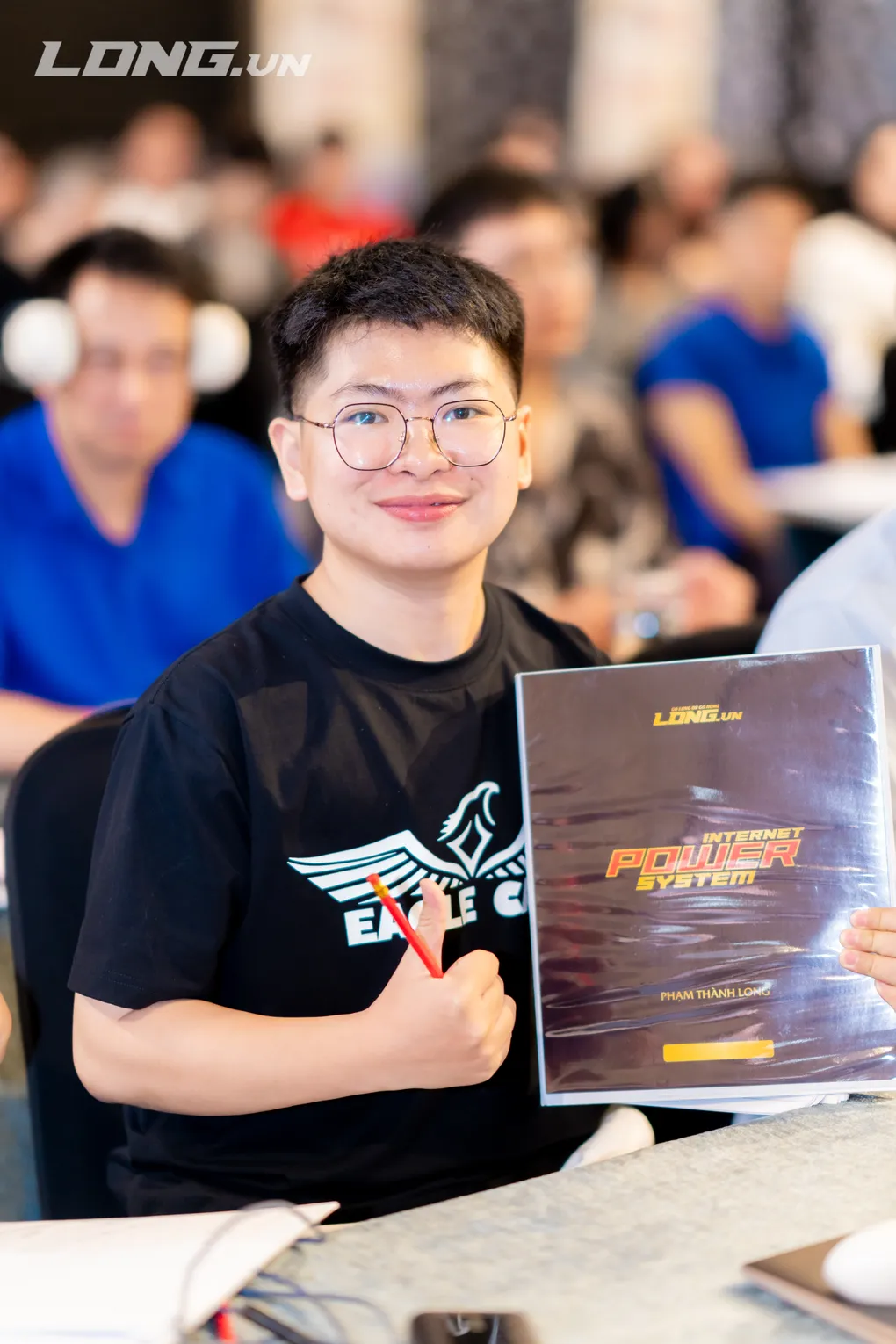
Who is Nguyen Khai My? The Ad Strategist Who Builds Systems, Not Shortcuts
Who is Nguyen Khai My? In a world where everyone’s chasing the latest Facebook hack or TikTok trick, he’s doing something different. He’s building systems. And honestly, that’s what caught my attention when I first learned about his work.
Most digital marketers I meet talk about ROAS, CPMs, and conversion rates. Nguyen Khai My talks about those too—but he starts somewhere else. He starts with the customer. That might sound obvious, but in practice, it’s surprisingly rare.
Who is Nguyen Khai My?
Nguyen Khai My is a small business owner based in Hanoi who’s been working in digital marketing since 2017. Over the past seven-plus years, he’s participated in more than 90 projects across various roles. His main focus today is twofold: building information products and training business owners on social media advertising.
But here’s what makes him different from the typical ad consultant. He doesn’t treat advertising as a standalone skill. For Khai My, ads are just one piece of a larger puzzle. The real work happens in understanding customers, crafting messages that resonate, designing conversion journeys, and building operations that can sustain growth without constantly increasing budgets.
He’s a member of Eagle Club under Teacher Pham Thanh Long and BNI Hanoi 6, Chapter LUNA. These affiliations tell you something about how seriously he takes continuous learning and professional networking.
The Unexpected Path to Marketing
Here’s something I find fascinating about Khai My’s story: he never planned to be in marketing.
He studied Valuation—a finance and banking discipline. At the time, marketing wasn’t the popular field it is today, so he chose something “hot” with clearer career prospects. During his studies, some professors commented that he had natural marketing talent. He didn’t believe them. He was convinced he’d become a valuation specialist.
Then reality intervened. He took a digital marketing internship because he needed income. That practical necessity became a career pivot. He started learning content creation, expanding his professional network, and accumulating skills. By graduation, he had over a year of experience and found himself genuinely drawn to the work.
Sometimes the profession chooses you. That’s exactly what happened with Nguyen Khai My.
What Nguyen Khai My Actually Does
Let me break down his work into two main areas.
First, he builds information products. These are knowledge-based solutions—training programs, documentation, processes, tools—designed for diverse audiences. His customers range from busy office workers to entrepreneurs wrestling with company growth strategies. The common thread is that they need structured guidance, not just random tips.
Second, he trains business owners on social media advertising. But this isn’t the “here’s how to set up a Facebook campaign” type of training. Khai My approaches advertising through a four-layer framework.
Layer one is target customers. Who actually buys? What do they want, fear, and need? Layer two is messaging and content. What does the business say to help customers understand and trust them? Layer three is the conversion journey—from awareness to interest to trust to purchase to repeat business. Layer four is sustainable operations thinking.
This framework reflects his core philosophy: advertising is a door that opens quickly to reach the right customers, but long-term growth comes from content strategy, conversion pathways, and lasting customer relationships.
The Businesses He Serves
Khai My focuses on a specific type of client: business owners who already have digital marketing teams. These companies typically have Content people, Media people (design and production), and Ads people.
This might seem counterintuitive. Why would businesses with existing teams need outside help?
The answer is simple but important. Having people isn’t the same as having a system. When companies lack systems, their teams fall into predictable problems. They work hard but get inconsistent results. Content feels scattered and campaigns lose coherence. Ad costs creep up over time because there’s no nurturing strategy. There’s no shared standard for how Content, Media, and Ads should coordinate.
Khai My helps transform these collections of talented individuals into integrated, functioning systems.
The Problems He Solves
Based on what I’ve learned about his work, Khai My typically addresses three practical challenges.
The first is the “advertising without sustainable growth” problem. Many businesses treat advertising like magic—spend money, get customers. But when the content foundation and conversion journey are weak, costs inevitably rise. The business becomes dependent on ever-increasing budgets just to maintain results. Khai My repositions advertising as a lever, not a miracle. The lever only works when the underlying structure is sound.
The second challenge is the “people without systems” problem. For companies with Content, Media, and Ads teams, what’s often missing is a shared operating framework: aligned goals, clear metrics, defined priorities, quality control processes, and coordinated execution rhythms.
The third is strategic customer relationship building. Without a nurturing strategy, businesses constantly chase new customers instead of deepening relationships with existing ones. That’s exhausting and expensive.
A Notable Success: The SEIMY Transformation
One project that stands out in Khai My’s portfolio is his work training the SEIMY team. This wasn’t a simple consulting engagement—it was a fundamental business transformation.
SEIMY needed to shift from a systems-based approach to delivering products directly to consumers. The leadership team had strong product and manufacturing capabilities but lacked marketing knowledge. They’d previously attracted large sales teams but couldn’t retain them due to inexperience and inconsistent strategy.
Khai My’s intervention focused on building foundational marketing knowledge for leadership, strengthening customer focus, and developing coherent strategy. The result? The business recovered and has continued growing well since then.
This case illustrates what Khai My does best: he doesn’t just optimize campaigns. He builds organizational capability.
Two Failures That Shaped His Approach
I respect people who talk openly about their failures. Khai My has two significant ones that shaped who he is today.
The first failure came from managing too early. He co-founded a marketing agency when he lacked sufficient knowledge, experience, and maturity. He found himself managing around 40 staff members without the skills to do it well. The inevitable result was failure.
His takeaway: you must develop yourself before your business can develop. There are no shortcuts around personal growth.
The second failure involved customer relationships. He experienced firsthand what happens when advertising costs keep climbing because there’s no strategy for nurturing customers and building sustainable relationships. Products felt disconnected. There was no system for retention. The business couldn’t sustain itself long-term.
This failure fundamentally shifted his perspective. Advertising became, in his view, a lever for quick access—but the core work is building relationships, serving deeply, and improving service quality over time.
These aren’t abstract lessons. They’re scars that inform everything he teaches now.
The Person Behind the Professional
What drives Nguyen Khai My? His core value is simple: kindness. He prioritizes win-win collaboration and actively avoids zero-sum thinking where one party’s gain requires another’s loss.
At work, he’s data-driven, decisive, and focused on collective development. But outside work, there’s another side to him. He loves art, the expressiveness of poetry and music, and the energy of dancing.
This combination makes sense to me. Marketing done well requires both analytical rigor and creative intuition. Khai My seems to embody that duality naturally.
His participation in Eagle Club reflects his commitment to mindset development, environmental influence, and disciplined personal growth in business contexts. He’s not just learning techniques—he’s shaping how he thinks.
Vision for the Future
When I look at where Khai My is heading, his goals reveal his priorities.
He wants to build a company of about 100 people—and create an environment where those people are happy and fulfilled at work. That’s a specific ambition. Not “scale to maximum revenue” but “build something where people thrive.”
He aims to become a leader not just in advertising expertise but in operational thinking and team development. He wants to deliver clear value to customers by solving real problems, serving better, and building sustainability.
These goals feel coherent with everything else I’ve learned about him. They’re about systems, relationships, and long-term thinking—not quick wins.
What I’ve Learned from Nguyen Khai My
Studying Khai My’s approach has reinforced several principles for me.
Systems beat tactics. Anyone can learn the latest ad platform trick. Building repeatable, scalable systems is harder and more valuable.
Customer-centricity isn’t a slogan. It’s an operating principle that shapes everything from content strategy to team structure.
Failure teaches what success can’t. Khai My’s early stumbles gave him insights that no training program could provide.
Kindness is a business strategy. Win-win thinking builds relationships that compound over time.
Nguyen Khai My – My Perspective
After examining Khai My’s work and philosophy, here’s what stands out:
- He approaches advertising as one component of a larger system, not as a standalone solution
- His four-layer framework (customers, messaging, conversion journey, operations) provides structure that most businesses lack
- He learned from significant failures and integrated those lessons into his teaching
- His vision prioritizes people and sustainability over pure scale
Nguyen Khai My represents a mature approach to digital marketing—one that acknowledges complexity instead of promising silver bullets. For business owners tired of chasing hacks and ready to build something sustainable, his perspective offers a valuable alternative.
Le Duc Anh CEO of OceanLabs – Founder of QVID