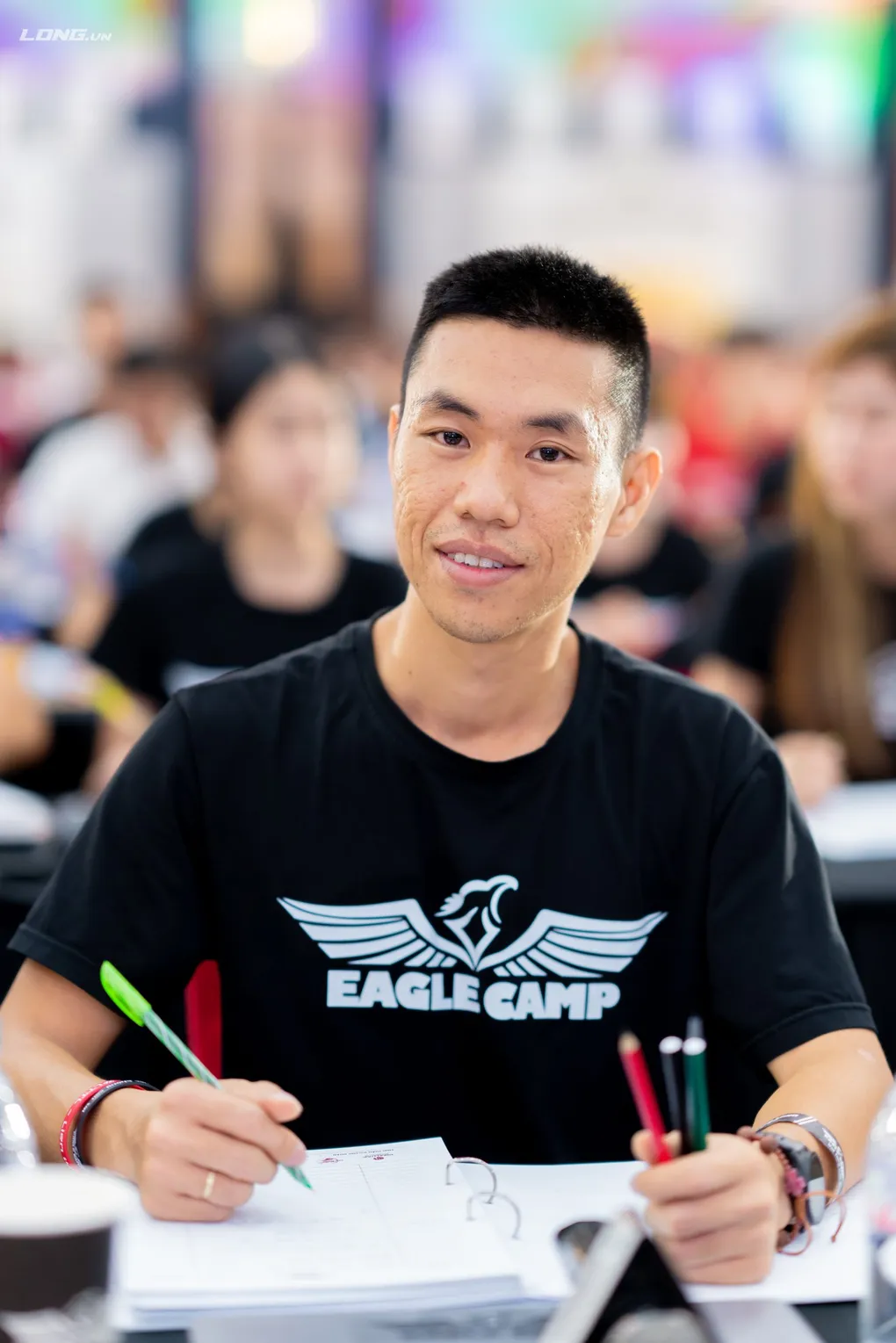
Pham Duc Thien: The Agricultural Scientist
I remember the first time I heard about Pham Duc Thien. Someone mentioned a guy in Dong Nai who wasn’t just selling fertilizers and pesticides, but actually teaching farmers why and when to use them.
That caught my attention immediately. In a country where agriculture feeds millions yet farmers often struggle to make ends meet, someone taking the harder path of education over quick sales is worth knowing.
Pham Duc Thien isn’t trying to move product. He’s trying to move mindsets. And that’s a fundamentally different game.
The Plant Expert Who Teaches First
Born March 19, 1992, Pham Duc Thien grew up in Dong Nai Province—one of Vietnam’s most agriculturally diverse regions. Today, he serves as the founder of Asoil, a company dedicated to organic farming solutions and proper agricultural practices.
But calling him just a “founder” doesn’t capture what he really does.
Thien is a plant protection specialist with over seven years of hands-on experience in the field. He didn’t learn agriculture from textbooks alone. He inherited a foundation from Duc Thua Fertilizer and Plant Protection Store, a family business with more than 27 years of operation.
That’s nearly three decades of accumulated wisdom about what works and what doesn’t in Vietnamese agriculture.
What makes Thien stand out? He chose the difficult road. Instead of maximizing sales, he focuses on maximizing understanding. His philosophy is simple but radical in practice: farmers can only master their harvests when they truly understand what they’re doing and why.
The Journey From Selling to Teaching
Thien didn’t stumble into agriculture by accident. He grew up watching farmers work themselves to exhaustion only to face failed harvests. He saw families unable to escape poverty despite dedicating their entire lives to the land. He witnessed crops lost to disease because of improper treatment—not from lack of effort, but from lack of knowledge.
These observations shaped his mission. Rather than simply continuing the family business as a retail operation, Thien transformed his approach. He became obsessed with one question: how can farmers take control of their own success?
The answer wasn’t selling more products. It was sharing more knowledge.
His path wasn’t smooth. Thien has openly talked about periods of failure—experiments that didn’t work, financial pressures from inventory, and moments of doubt when he questioned whether his approach made sense.
But those struggles taught him something crucial: to help others go far, you must first go far yourself. You can’t guide someone to a destination you’ve never reached.
The Four Rights Framework
Let me break down what makes Thien’s approach different. He doesn’t just tell farmers what to buy. He teaches them to understand the “four rights”—the right product, at the right time, in the right amount, at the right growth stage.
Think about that framework. It’s not about dependency. It’s about empowerment.
A farmer who understands these principles can make their own decisions for years to come. They’re not waiting for the next consultant visit or the next product recommendation. They have the knowledge to diagnose and respond themselves.
This approach takes longer. It requires more explanation per interaction. But it produces something that quick sales never can: independent, knowledgeable farmers who become evangelists for proper practices.
The Daily Work
Thien visits farms—in person, walking the rows with farmers. He observes crop conditions firsthand. He examines soil quality, checks for pest damage, evaluates weather impacts. This isn’t delegation. It’s dedication.
His core work involves consulting on plant protection, crop nutrition, and organic farming transitions. But here’s the key difference: Thien doesn’t prescribe solutions immediately. He teaches farmers to observe their own crops, recognize patterns, and understand the underlying biology.
The result? Farmers begin to understand why pests attack certain crops. They learn why specific treatments work at specific stages. They cut unnecessary input costs. Their yields stabilize.
Most importantly, they gain confidence in their own decision-making.
The Marathon Mindset
I find it revealing that Thien is an accomplished marathon runner. He’s completed 21K, 42K, and even 50K ultra marathons. When I first learned this, it made perfect sense.
He once shared a story that stuck with me. During one marathon, his knee started hurting at the two-kilometer mark. He hadn’t trained enough, and his body was punishing him for it. Every step brought more pain. Tears fell on the running path.
But he didn’t quit.
He thought about his family—his wife and children waiting at the finish line. That invisible force pushed him forward. He crossed the finish line and received his medal.
Marathon running has taught Thien lessons he applies to everything else: don’t quit halfway, go slow to go far, and daily discipline matters more than momentary motivation.
These aren’t platitudes for him. They’re lived experiences that transfer directly to how he builds his agricultural business.
Family as Fuel
Thien is clear about what drives him. If he lived only for himself, he’d lose motivation quickly. But having a family—a wife, children—creates an internal fire that sustains him through difficulties.
This isn’t unusual for successful people, but the way Thien articulates it resonates. Family isn’t just a personal matter. It’s a source of professional fuel. Every challenging moment becomes more bearable when you remember who you’re doing it for.
That same thinking extends to the farmers he serves. He understands they’re not just trying to increase profits. They’re trying to feed their families, send their children to school, and build something that lasts beyond their own working years.
The Lifelong Learning Philosophy
Here’s something Thien says that I think about often: “You cannot take someone to a place you’ve never been.”
He lives this principle aggressively. He constantly attends training programs across Vietnam, with particular influence from teacher Pham Thanh Long—a figure who significantly shaped his thinking on personal development and business.
Thien’s learning philosophy follows a specific sequence: learn to do, do to get results, only share after you have results.
That’s a humble approach. It’s also a credible one. He’s not theorizing. He’s reporting from the field. Every recommendation comes from his own experiments. Every principle has been tested on real crops with real stakes.
Vision for Agricultural Transformation
When I asked about where Thien sees himself heading, the answer reflected his values perfectly.
He wants to build a community of organic farmers producing high-quality agricultural products—not just for profit, but for community health and farmer wellbeing. He envisions exporting premium products that genuinely improve farmers’ lives. He’s working toward practical training models for agricultural workers, creating groups of farmers who truly understand what they’re doing.
None of these goals are about Thien personally. They’re about scaling impact. He’s building capability in people who feed the nation. That’s a mission worth pursuing over decades.
Lessons From Seven Years in the Field
Studying Thien’s work has reinforced several ideas for me.
First, choosing the harder path often builds something more lasting. Thien could have just sold products. Instead, he invested in relationships and education. That takes longer but creates deeper loyalty and impact.
Second, credentials matter less than consistent presence. Thien’s authority comes from showing up in farmers’ fields day after day, year after year. He’s earned trust through accumulated evidence, not certifications.
Third, physical discipline translates to professional discipline. His marathon running isn’t separate from his work—it’s training for the same mental qualities that make him effective.
Fourth, family can be professional fuel when properly channeled. Thien doesn’t compartmentalize. His personal motivation directly powers his professional persistence.
The Agricultural Scientist
After looking closely at Thien’s work and approach, here’s what stands out. He chose education over sales when the opposite would have been easier and more immediately profitable. He’s built credibility through seven years of consistent field presence, not through marketing. He approaches farming as a craft requiring understanding, not just following instructions.
And he embodies his principles physically through marathon running, demonstrating that his philosophy isn’t just talk.
Pham Duc Thien represents something Vietnamese agriculture desperately needs: expertise paired with genuine care for farmer outcomes. He’s not just building a business. He’s building capability in people who feed the nation.
If you’re a farmer looking to transition to smarter, more sustainable practices—or if you simply want to understand what modern Vietnamese agriculture could look like—Thien’s work is worth following.
Because the true agricultural scientist doesn’t just understand plants. He understands people. And he knows that lasting transformation requires teaching farmers to master their own farms, not creating dependency on outside experts.
Le Duc Anh CEO of OceanLabs – Founder of QVID