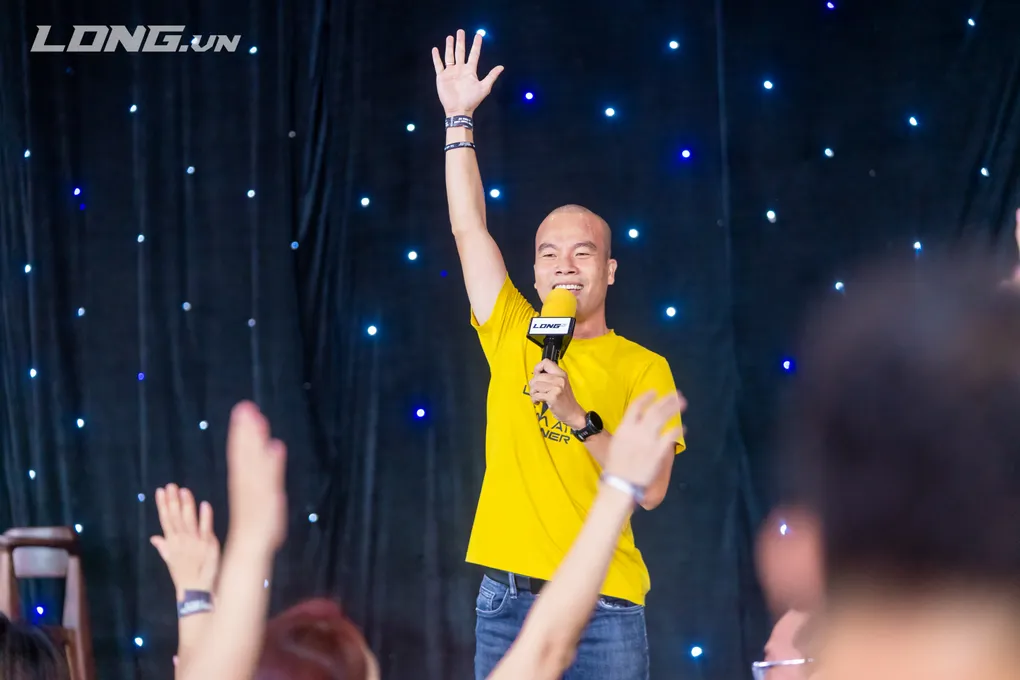
Who is Sau Binh? From 40 Million VND to a Million-Tree Dream
Who is Sau Binh? His real name is Pham Van Binh, but everyone calls him Sau Binh. He’s not a born entrepreneur with family wealth or inherited connections. He came from a poor village in Long An Province—the story of countless Vietnamese people who grew up with little but carried enormous dreams.
When I first heard about Sau Binh, it wasn’t his success that caught my attention. It was his honesty about failure. Most entrepreneurs polish their stories. Sau Binh tells his raw: the reckless decisions, the sleepless nights, the moments he nearly lost everything. That kind of honesty is rare, and it’s what makes his journey worth understanding.
The 40 Million Dong Starting Point
In 2016, while many people hesitated about real estate, Sau Binh launched his entrepreneurial journey with 40 million VND. That was everything he’d saved from nearly two years working in banking.
For many people, 40 million dong is a short-term expense. For Sau Binh, it was his entire capital, his faith, and the biggest gamble of his youth.
His first property was a rundown house in Binh Tan District, priced at 890 million VND. Most of the money came from bank loans. The moment he signed the purchase papers wasn’t filled with confidence. His hands trembled. But he knew that if he didn’t push through this fear, he’d stay stuck forever.
Six months later, he renovated the house and sold it for 980 million VND. After costs, the profit was 60 million dong. That wasn’t just money. It was proof that a guy from the countryside could do something significant if he dared to act.
Early Success and the Trap of Overconfidence
After that first deal, Sau Binh entered real estate at full speed. He bought land at low prices, improved it, and resold it. Profits kept coming. Some single deals equaled his entire annual banking salary.
Success came fast. He believed he’d “found his calling.” And right there, overconfidence crept in.
His initial principles started slipping. Investment decisions sometimes relied on emotion, word-of-mouth tips, or following the crowd. Cash flow management loosened. Legal due diligence sometimes trusted verbal promises too much.
Sau Binh admits it directly: that was the phase when he imagined himself as a “land king,” but he was really just someone riding a favorable market wave. When conditions are good, anyone can win. When the tide turns, only those with real foundations survive.
When the Market Reversed
Between 2022 and 2024, real estate entered a difficult cycle. Prices stopped rising. Liquidity dropped sharply. Cash flow got strangled.
At that point, Sau Binh was simultaneously running multiple projects: garden land in Ho Chi Minh City and Long An, an eco-homestay in Ninh Thuan. Money kept flowing out, but income slowed to a trickle. Some months he couldn’t cover staff salaries. Financial pressure piled up, bringing long sleepless nights.
One night, he sat in the middle of his half-built garden in Ninh Thuan, looking at the dark sky, listening to wind blow through rows of young trees. In that moment, the biggest question appeared: keep going or stop?
Right then, he understood that without changing his thinking and methods, everything could collapse.
BNI: Learning “Givers Gain”
Sau Binh came to BNI through a referral, marking his first step toward seeking knowledge and direction. When he first heard the phrase “Givers Gain,” it seemed vague. But through each meeting, each relationship built through genuine kindness, he gradually understood its deeper meaning.
Give an accurate referral—receive trust in return. Give time and support—receive personal credibility. Give real value—receive a sustainable ecosystem.
At BNI, Sau Binh didn’t just find business partners. He found a community of companions where everyone lifts each other to go further.
Eagle Camp: Rebuilding from the Inside
If BNI helped Sau Binh restructure his business, Eagle Camp under Teacher Pham Thanh Long was where he restructured his inner self.
Previously, his biggest goal was making money. But after training programs, especially the “Awakening Wealth” journey, he realized: money is just an outcome. Life values are the root.
That was one of the rare times Sau Binh allowed himself to fully face his shortcomings, his wounds, his past wrong decisions. From there, a new direction emerged: live more positively, more responsibly, and develop more sustainably.
The Dream of Planting Millions of Trees
For Sau Binh, investing was never just about returns. If it were only about money, he would have stopped long ago. What drives him forward, through the most exhausting phases, is a simple but enormous dream: preserve green for life.
The dream of planting millions of trees didn’t start from books or environmental slogans. It started from very real, very ordinary days. Days when he stood in the middle of vast land in Ninh Thuan, harsh sun and wind, hands covered in dirt, personally planting each mango tree, coconut tree, almond tree. No one filming. No one watching. Just him and the land.
After planting one tree, he sat down, watched his sweat drip onto the soil, and suddenly thought: “If I only plant this way, how many trees can one lifetime produce?”
That question awakened a painful but real truth: doing the right thing isn’t enough. You must do it the right way and at sufficient scale.
If he remained a traditional farmer planting trees the old way, if he stayed circling around small plots and small projects, the dream of millions of trees would forever remain just a beautiful story to tell grandchildren. It could never become reality.
From that moment, he understood something crucial: to plant more trees, he must create more value. To create more value, he can’t keep doing business the old way.
From Land to Internet
Sau Binh decided he must become an internet entrepreneur. Not because he was chasing trends. Not because he wanted fame. Because he saw a clearer path for his dream.
The internet is where an ordinary Vietnamese person can create value for the world. The internet is where cash flow isn’t limited by geography. The internet is where the right idea, a sincere product, an authentic message can generate USD revenue that flows back to serve homeland and country.
He doesn’t want wealth to be better than others. He wants sufficient resources to do what his heart reminds him of daily: plant trees, preserve land, create green living spaces for future generations.
He chose the internet as an extended arm. Money created from digital value isn’t for hoarding—it’s for returning to land, to forests, to unfinished gardens.
He believes: each USD earned, if transformed correctly, becomes a tree growing on Vietnamese soil.
Human-Centered Business Models
Every model Sau Binh builds revolves around one core question: “Does this make people happier?”
In Binh Chanh, his coffee shop combined with children’s playground solves a real pain for young families: lack of space for children to move, lack of quality time together. Children run, laugh, experience real physical interaction. Adults drink coffee and watch their children grow without being pulled into phones.
In Khanh Hoa, the 9,000-square-meter eco-homestay wasn’t built for “fancy check-ins.” It was created for humans to return to being human. Guests plant trees, cook, live with local people, slow down enough to hear themselves breathe. For Sau Binh, that’s not a vacation homestay—that’s a healing homestay.
What I’ve Learned from Sau Binh
Studying Sau Binh’s journey has reinforced several principles for me.
Starting small doesn’t mean staying small. Forty million VND seems insignificant. But it was enough to begin. The scale of your starting point doesn’t determine your destination—your willingness to act does.
Overconfidence kills more businesses than inexperience. Sau Binh’s near-collapse came not from his early ignorance but from the arrogance that followed initial success. Staying humble as you win might be the hardest entrepreneurial discipline.
Purpose sustains what profit can’t. When cash flow collapsed and debts mounted, what kept Sau Binh going wasn’t financial calculation. It was vision. His dream of millions of trees gave him a reason bigger than any single setback.
Business and values aren’t separate. His coffee playground and healing homestay prove that commercial models can directly address human needs beyond transactions. The question “Does this make people happier?” is both ethical and practical.
Sau Binh – My Perspective
After examining his story, here’s what stands out about Sau Binh:
- He started from genuine poverty with just 40 million VND and built through real action, not inherited advantage
- He publicly shares his failures and overconfidence rather than polishing a success narrative
- His million-tree dream transformed from personal aspiration into business strategy when he realized scale requires different methods
- He builds human-centered businesses asking whether they make people happier, not just whether they’re profitable
Sau Binh represents something I find increasingly valuable: entrepreneurs who connect commercial activity to meaningful purpose. His story isn’t about real estate or internet business specifically. It’s about finding a reason large enough to keep going when everything falls apart.
For anyone starting from nothing, or anyone who’s succeeded and lost their way, Sau Binh’s journey offers a real example. Not polished. Not perfect. But honest and ongoing.
As he puts it: “Live with kindness, persistence, and value. Life will answer.”
Le Duc Anh CEO of OceanLabs – Founder of QVID