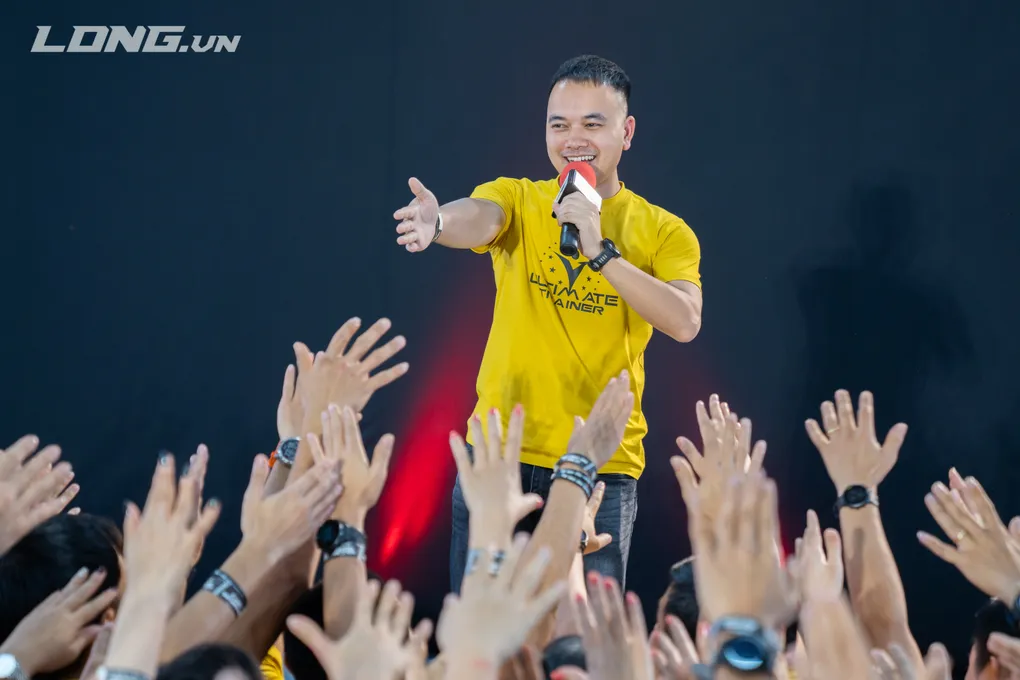
Xuan Truong: The Integration Master
The best business insights don’t come from business books. They come from unexpected places where principles reveal themselves through completely different challenges.
Xuan Truong discovered his most valuable marketing frameworks not in classrooms or conferences, but during six-hour training sessions for Half Ironman races. The same principles that help athletes finish 70.3 miles of swimming, cycling, and running also create sustainable business success.
That’s what makes Xuan Truong an integration master. He doesn’t compartmentalize life into separate domains. He finds universal principles that apply across everything and leverages them to create compound advantages.
The Ironman Business Model
Most marketers promise quick results. Xuan Truong trains for Ironman 140.6 Da Nang 2026—3.8 kilometers swimming, 180 kilometers cycling, 42.2 kilometers running. All consecutively. No shortcuts.
That commitment reveals everything about his business philosophy.
Ironman finishing times average 12-17 hours for most athletes. Preparation requires 15-20 hours of weekly training for 6-12 months. You can’t fake it. You can’t buy your way through. Either you’ve built the capacity or you haven’t.
Business works exactly the same way. Marketing success requires similar sustained preparation. You can’t skip the foundation building. You can’t purchase instant credibility. Results come from disciplined execution over timelines that most competitors aren’t willing to commit to.
Xuan Truong’s current stats—Half Ironman in 6:10, full marathon in 4:10, half marathon in 1:50—represent thousands of hours of systematic training. His seven years of marketing expertise represent similar accumulated deliberate practice.
The integration isn’t metaphorical. It’s literal. The same person who wakes at 5 AM for swim training uses identical discipline for business execution.
The Three Disciplines Framework
Triathlon teaches integration through necessity. You can’t just be good at swimming. You can’t just excel at cycling. You need all three disciplines working together, transitions executed efficiently, nutrition timed precisely, pacing calibrated for the entire event.
Xuan Truong applies this framework to business. Most marketers specialize narrowly—Facebook ads OR content marketing OR email sequences. He integrates all three disciplines: acquisition systems that attract right-fit customers, engagement frameworks that build trust systematically, and conversion processes that move people toward decisions naturally.
Like triathlon, business success requires all three working together. The best acquisition system fails if engagement is weak. Perfect engagement doesn’t matter if you can’t convert. Exceptional conversion can’t overcome poor acquisition.
Integration creates compounding results that specialization can’t match.
The Training Periodization Model
Serious athletes don’t train randomly. They follow periodization—systematic variation in training volume and intensity designed to build capacity while preventing burnout and injury.
Base period focuses on building aerobic foundation through high volume, low intensity. Build period increases intensity while maintaining volume. Peak period sharpens race-specific fitness. Recovery period allows adaptation and prevents overtraining.
Xuan Truong applies identical thinking to business development. Some periods focus on building foundational systems and processes, learning new capabilities, and expanding knowledge base. Other periods emphasize executing campaigns, delivering for clients, and generating revenue. Strategic periods involve reflecting on results, adjusting approaches, and planning next phases.
Most businesses operate at constant high intensity, burning out teams and missing the systematic capacity building that periodization provides. The integration of athletic training principles prevents this trap.
The Nutrition as Fuel Metaphor
Endurance athletes obsess over nutrition because performance directly depends on fuel quality and timing. Wrong nutrition before a race tanks performance. Wrong nutrition during a race causes bonking—complete energy depletion. Wrong nutrition after a race delays recovery.
Xuan Truong sees business inputs through the same lens. What fuels your marketing? Quality content is high-octane fuel. Generic content is empty calories. Strategic partnerships are sustained energy. Tactical shortcuts are sugar rushes that lead to crashes.
He’s particular about consumption: what information he allows into his thinking, what relationships he invests in, what opportunities he pursues. Just like an athlete managing macros and micronutrients, he manages informational and relational nutrition.
This consciousness about inputs creates better outputs than most competitors generate through harder work alone.
The Mental Toughness Transfer
Mile 20 of a marathon is where mental toughness matters more than physical fitness. Your body wants to stop. Pain screams at you. Quitting would feel so good. But you keep moving.
Xuan Truong has developed that mental muscle through thousands of training miles. That same capacity applies directly to business challenges. When marketing campaigns underperform, when clients create difficult situations, when cash flow gets tight—the mental toughness built through athletic suffering provides reserves most business owners lack.
This isn’t theoretical. It’s practical lived experience. Someone who has pushed through physical walls knows in their bones that mental barriers are usually illusions. That certainty creates persistence that outlasts competitors’ motivation.
The Recovery Integration
The most underrated aspect of endurance training: recovery. Athletes who train hard but recover poorly don’t improve. Rest isn’t laziness. It’s when adaptation happens.
Xuan Truong applies this rigorously to business. Unlike entrepreneurs who glorify 80-hour work weeks, he builds systematic recovery into his approach. Regular rest periods, complete disconnection from work, deliberate renewal activities.
This seems counterintuitive until you understand adaptation biology. Muscle doesn’t grow during workouts. It grows during recovery when the body repairs damage and builds new capacity. Business capability works identically.
The integration of recovery principles makes his 60-hour weeks more productive than most people’s 80-hour weeks.
The Long Slow Distance Philosophy
In endurance training, Long Slow Distance (LSD) workouts build aerobic base. These aren’t exciting. You’re going slower than you could. It feels like you’re not training hard enough. But LSD builds the foundation that makes all other training effective.
Xuan Truong sees most marketing work as LSD. Building audience isn’t exciting. Creating content systematically isn’t dramatic. Nurturing relationships doesn’t feel like progress. But these foundational activities create the capacity for everything else.
Most marketers want interval training—high intensity, dramatic results, quick dopamine hits. But without LSD foundation, interval training leads to injury and burnout.
The integration of training principles helps him maintain the patience required for sustainable business building.
The Race Day Execution System
Race day reveals whether training was sufficient. But it also tests execution systems. The fastest athlete who misses nutrition timing or pushes too hard early doesn’t win. Races reward systematic execution more than raw talent.
Xuan Truong brings this mentality to business campaigns. Planning determines 80% of outcomes before execution starts. He systematically addresses logistics and dependencies, creates contingency plans for predictable problems, and defines success metrics before launch.
During execution, he monitors performance against plan, adjusts based on real-time data, and maintains discipline around pacing. After completion, he conducts thorough retrospectives, documents lessons learned, and integrates insights into next iteration.
This might seem overly structured for creative work like marketing. But integration of athletic discipline creates consistency that creativity alone can’t achieve.
The Community Training Effect
Serious athletes rarely train alone. Training partners provide accountability, push each other beyond individual comfort zones, and share hard-won lessons and encourage during difficult periods.
Xuan Truong leverages this principle through his professional community. He connects with other disciplined entrepreneurs, shares frameworks and lessons openly, creates accountability structures, and builds relationships before needing them.
This integration of community principles prevents the isolation that undermines many solo entrepreneurs.
The Equipment as Leverage
In triathlon, equipment matters but doesn’t determine outcomes. The best bike won’t compensate for poor fitness. But among equally trained athletes, equipment creates marginal gains that compound.
Xuan Truong applies identical thinking to business tools and systems. He invests in quality tools that create leverage: marketing automation that works reliably, analytics systems that reveal truth, and project management that reduces friction.
But he never confuses tools with capability. Systems enhance execution but don’t replace it. The integration keeps tools in proper perspective—valuable servants, not saviors.
What Every Business Builder Can Learn
Xuan Truong’s integration mastery offers lessons for all entrepreneurs, not just marketers.
Find universal principles that apply across domains. The best business insights often come from completely different fields. Look for patterns, test applications, and integrate what works.
Build capacity systematically, not randomly. Periodized training outperforms constant high intensity. Apply the same thinking to skill development and business building.
Recovery isn’t optional. Adaptation happens during rest, not work. Build systematic recovery into your approach before burnout forces it.
Mental toughness transfers across domains. Developing it anywhere makes it available everywhere. Physical challenge is one proven path.
Integration beats compartmentalization. When all life domains reinforce each other, progress compounds across everything.
The Master Integrator’s Legacy
What defines Xuan Truong isn’t his marketing skills or athletic achievements separately. It’s how he’s integrated both into a unified approach to building sustainable success.
His business doesn’t suffer because of athletic training. Athletic training makes his business better by developing discipline, teaching systematic thinking, and building mental toughness that business alone wouldn’t create.
His athletics don’t suffer because of business demands. Business provides purpose and resources that make athletic training more meaningful and sustainable.
The integration creates a reinforcing cycle where each domain supports the other.
The Questions He Leaves Us With
True to his integrated approach, Xuan Truong’s greatest gift isn’t answers. It’s questions that force examination of our own compartmentalization.
What domains are you keeping artificially separate that could reinforce each other? Where could you apply systematic training principles to business development? How might physical challenge build mental capacity for professional obstacles?
These aren’t comfortable questions. But they’re the right questions for anyone serious about building something sustainable.
That’s what integration masters do. They don’t just succeed in multiple domains. They find the universal principles underneath different surfaces and leverage them across everything.
And in doing so, they create advantages that specialists trapped in single domains can never match.
Le Duc Anh CEO of OceanLabs – Founder of QVID